




If you think about how often you use your phone, search online, or shop digitally, you’re already exchange with artificial intelligence in daily life even if you don’t notice it. AI is no longer limited to research labs or tech companies. It has quietly become part of everyday routines, helping people save time, make smarter decisions and automate small tasks.
Many people still wonder what is artificial intelligence with examples, because AI sounds like a complex technical concept. In reality, it’s much simpler. Artificial intelligence is technology that allows machines or software to learn from data, recognize patterns and improve performance over time.
When you look around modern technology, you’ll find many artificial intelligence examples in daily life from voice assistants answering questions to apps suggesting what you should watch or buy next.
What Is Artificial Intelligence with Examples?
To understand modern technology, it helps to start with what artificial intelligence is with examples.
Artificial intelligence is the simulation of human intelligence in machines. These systems can learn from experience, analyze data and perform tasks that normally require human thinking.
Some simple examples of artificial intelligence include:
- Voice assistants like Alexa or Google Assistant
- Email spam filters
- Face recognition in smartphones
- Chatbots on websites
- Recommendation systems on Netflix and YouTube
These are common examples of artificial intelligence in everyday life that people use daily without realizing it.
Why Artificial Intelligence Is Important in Daily Life
The importance of artificial intelligence in daily life is growing quickly. AI saves time, improves accuracy and helps people make better decisions.
Some major uses of artificial intelligence in daily life include:
- Automating repetitive tasks
- Improving online experiences
- Increasing digital security
- Providing personalized recommendations
As technology evolves, more industries are adopting AI to improve efficiency and customer satisfaction.
Artificial Intelligence Examples in Daily Life
There are many real-world artificial intelligence examples in daily life that people interact with regularly.
Smartphones and Voice Assistants
Smartphones use AI for predictive typing, camera optimization, facial recognition and voice commands. These are everyday examples of artificial intelligence working quietly in the background.
Social Media Platforms
Social media apps use AI algorithms to show personalized content based on user behavior. This is one of the fastest growing artificial intelligence applications today.
Online Shopping Recommendations
E-commerce websites use AI to recommend products based on browsing history and past purchases. This is one of the most useful uses of artificial intelligence in daily life.
Navigation and Maps
Navigation apps use AI to analyze traffic patterns and suggest faster routes. These are practical examples of artificial intelligence in everyday life.
Streaming and Entertainment
Streaming platforms use AI to recommend movies, shows and music, making entertainment more personalized and enjoyable.
Uses of Artificial Intelligence in Daily Life Across Industries
AI is not limited to personal apps. There are many professional uses of artificial intelligence in daily life across industries.
Healthcare
AI helps with disease detection, medical imaging and virtual health support. These advanced artificial intelligence applications support doctors in making faster and more accurate decisions.
Education
AI tools create personalized learning experiences, automate grading and help students learn at their own pace.
Banking and Finance
AI detects fraud, automates customer support and improves financial forecasting.
Smart Homes
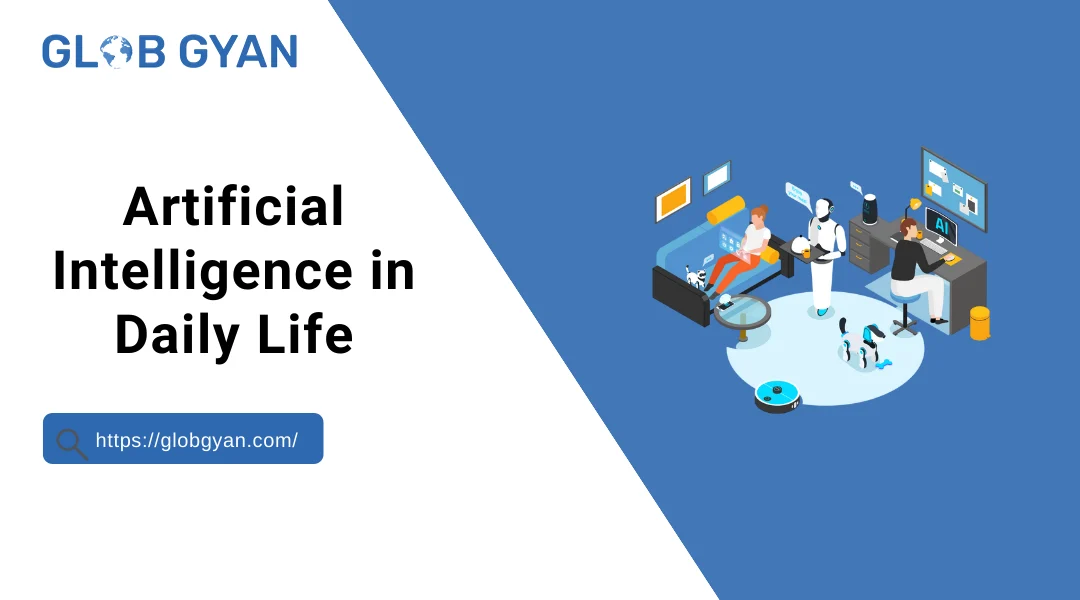
Smart home devices use AI for security monitoring, lighting automation, voice control and energy management.
How to Use Artificial Intelligence in Daily Life
If you’re wondering how to use artificial intelligence, here are simple ways to start:
For Individuals
- Use AI writing tools to improve productivity
- Use AI finance apps for budgeting and expense tracking
- Use AI fitness and health apps for wellness monitoring
For Businesses
- Use AI chatbots for customer support
- Use AI analytics tools for marketing insights
- Use AI automation to reduce repetitive tasks
Learning how to use artificial intelligence can improve efficiency in both personal and professional life.
What Are Examples of Artificial Intelligence in the Future?
The future of AI looks even more promising. Upcoming developments may include:
- Self-driving vehicles
- AI-powered medical diagnosis
- Smart cities
- Advanced robotics
These will become advanced examples of artificial intelligence in everyday life over the next few years.
Challenges of Artificial Intelligence
While AI offers many benefits, it also comes with challenges:
- Data privacy concerns
- Job automation risks
- Ethical decision-making issues
Understanding these challenges helps create safer, more responsible artificial intelligence systems.
Artificial Intelligence and Automation
To fully understand modern technology, it’s important to see how artificial intelligence and automation work together.
In most systems:
- AI makes smart decisions
- Automation performs tasks automatically
For example:
- AI detects spam emails → Automation moves them to the spam folder
- AI analyzes customer behavior → Automation sends personalized emails
- AI predicts traffic → Automation updates routes in navigation apps
This connection explains why businesses invest heavily in AI and automation together.
Final Thoughts
Today, artificial intelligence in daily life shapes how people communicate, shop, travel, learn and work.
By understanding real examples of artificial intelligence, exploring modern artificial intelligence applications, and learning how to use artificial intelligence, individuals and businesses can adapt more confidently to modern technology without fear or confusion.
FAQs
Artificial intelligence in daily life refers to how AI is used in everyday activities like voice assistants, navigation apps, online shopping recommendations and spam filters.
Common examples include voice assistants, face recognition on smartphones, chatbots, streaming recommendations and traffic navigation apps.
AI saves time, improves accuracy, enhances digital security and helps people make better decisions in both personal and professional life.
AI makes smart decisions using data, while automation performs tasks automatically. Together, they create faster and more efficient systems.
Individuals can use AI tools for writing, budgeting, fitness tracking, navigation, productivity and personalized content recommendations.
The main uses include automation, personalization, security improvement, healthcare support, education tools and smart home management.
Future examples include self driving cars, AI powered medical diagnosis, smart cities and advanced robotics.