




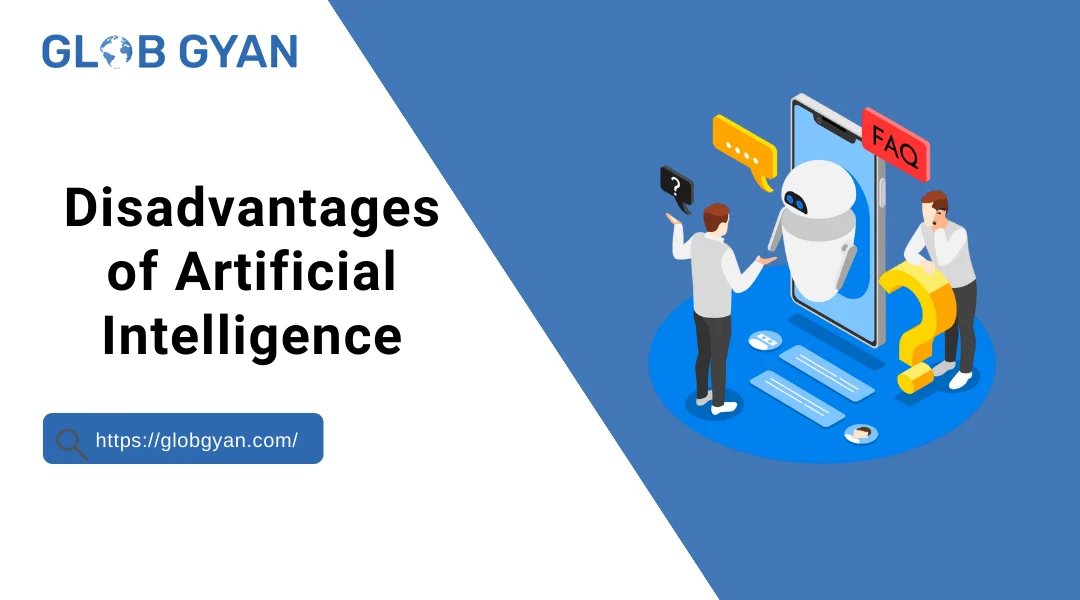
Artificial Intelligence is now a part of everyday life. People use AI while shopping online, using maps, watching videos or talking to customer support chatbots. AI helps businesses save time and improve work speed. But along with these benefits it is also important to understand the disadvantages of Artificial Intelligence.
Today, many companies are using AI to increase productivity and reduce manual work. However the disadvantages of AI are becoming more visible as technology continues to grow. Many experts are now discussing artificial intelligence disadvantages because AI can create serious problems related to jobs, privacy and human decision-making if it is not used carefully
What Are the Disadvantages of AI?
The artificial intelligence disadvantages include technical challenges, ethical issues and social risks. The limitations of artificial intelligence show that machines can process large amounts of data quickly, but they cannot think, feel or understand situations like humans.
The negative effects of artificial intelligence can be seen in job automation, privacy risks and decision making errors. Understanding these problems helps companies and governments use AI safely and responsibly.
Job Loss and Employment Challenges
One of the biggest drawbacks of artificial intelligence is job loss due to automation. Many companies use AI machines to perform repetitive work faster and cheaper than human workers. Industries like manufacturing, retail and customer service are already experiencing this change.
This is a serious disadvantage of AI in daily life because job loss directly affects income and financial stability. Automation is also increasing long term risks of artificial intelligence especially for workers who do not have technical skills or training.
High Cost and Implementation Challenges
Another major part of the limitations of artificial intelligence is cost. AI systems require expensive hardware, advanced software and skilled professionals to operate.
This creates major artificial intelligence disadvantages for small businesses. Large companies can invest in AI easily but small businesses may struggle to compete.
Lack of Human Creativity and Emotional Understanding
AI can analyze patterns and data, but it cannot truly understand human emotions. This creates several negative effects of artificial intelligence, especially in jobs that require creativity and emotional understanding.
This is another important drawback of artificial intelligence because machines cannot replace human imagination, empathy or ethical thinking.
Data Privacy and Security Risks
AI depends heavily on data collection. This creates serious risks of artificial intelligence related to privacy and cybersecurity.
Some major risks include:
- Data misuse
- Personal information leaks
- Surveillance misuse
- Identity theft
These issues highlight the real negative effects of artificial intelligence in digital environments.
Bias and Ethical Issues
AI systems learn from data. If the data is biased, AI results can also become biased. This is a serious issue in hiring systems, banking decisions and law enforcement.
These problems show the real limitations of artificial intelligence and why ethical AI development is important.
Over-Dependence on AI in Daily Life
Today, many people rely on AI tools for navigation, writing, recommendations and decision making. This growing dependence is becoming one of the hidden disadvantages of AI in daily life.
Over time, this can reduce critical thinking and problem solving skills, increasing the long term risks of artificial intelligence for society.
Artificial Intelligence and Automation – Hidden Disadvantages
The connection between artificial intelligence and automation is very strong. Automation helps businesses work faster and reduce manual work, but it also reduces job opportunities in some sectors.
While automation improves productivity, it also highlights the drawbacks of artificial intelligence, especially related to employment and future job skills.
Future Risks of Artificial Intelligence
Experts are worried about future risks of artificial intelligence, such as autonomous weapons, deepfake technology and possible loss of human control over advanced AI systems.
These concerns highlight possible negative effects of artificial intelligence if AI is not controlled properly.
How to Reduce Artificial Intelligence Disadvantages
To reduce the disadvantages of Artificial Intelligence, governments and companies must focus on responsible AI use.
Strong data privacy laws, AI education programs, and better cooperation between humans and machines can help reduce the limitations of artificial intelligence while keeping its benefits.
Conclusion
Artificial Intelligence is changing the world quickly. But understanding the disadvantages of Artificial Intelligence is just as important as understanding its benefits. The disadvantages of AI, such as job loss, privacy risks and ethical problems, show that technology must be used carefully.By understanding artificial intelligence disadvantages, society can prepare for future challenges while still using AI for progress.
FAQs
The main disadvantages of artificial intelligence include job displacement, data privacy risks, high implementation costs, lack of emotional understanding and biased decision making.
AI can automate repetitive tasks, which may reduce certain job roles. However, it also creates new opportunities in technology, data science and AI management.
No. AI can process data faster, but it cannot think creatively, feel emotions or make ethical judgments like humans.
AI systems collect large amounts of data, which can lead to data misuse, surveillance concerns and cybersecurity risks if not handled properly.
AI learns from existing data. If that data contains bias, the AI system may produce unfair or inaccurate outcomes, especially in hiring, finance or law enforcement.
AI is safe when used responsibly with proper regulations, transparency and human oversight. Ethical development is key to minimizing risks.
We can reduce AI risks by improving data security, creating ethical AI guidelines, training workers for new skills and ensuring humans remain part of decision making.