




Choosing what to do after Class 12 can feel like standing at a crossroads with everyone shouting different directions. Engineering, degree, diploma, CA, UPSC… and then someone quietly says, “Have you thought about ITI?”
If you like practical work, want job-oriented skills, or don’t want to spend 4–5 years in theory-heavy courses, then ITI courses after 12th can be a smart and realistic option.
This guide explains everything clearly — courses, eligibility, fees, jobs, salary, and who should choose ITI in plain English, no confusion, no fake promises.
What Is ITI and Why Choose ITI After 12th?
ITI (Industrial Training Institute) offers skill-based technical training that prepares students for real-world jobs. Instead of long textbooks and exams, ITI focuses on hands-on training, machines, tools, and industry-ready skills.
Many students choose ITI after 12th because:
- They want early employment
- They prefer practical learning
- They want to work in technical or industrial fields
- They plan to start self-employment or workshops
Think of ITI as learning by doing, not just memorizing.
Can You Do ITI After 12th? (Eligibility Explained)
Yes, absolutely. Many people think ITI is only for students after 10th, but that’s not true. There are several ITI courses after 12th designed for higher qualification students.
ITI Eligibility After 12th
Eligibility depends on the trade, but generally:
- Passed 12th class from a recognized board
- Stream can be Science, Arts, or Commerce
- Minimum age is usually 14 years
- Some technical trades prefer Science (PCM) background
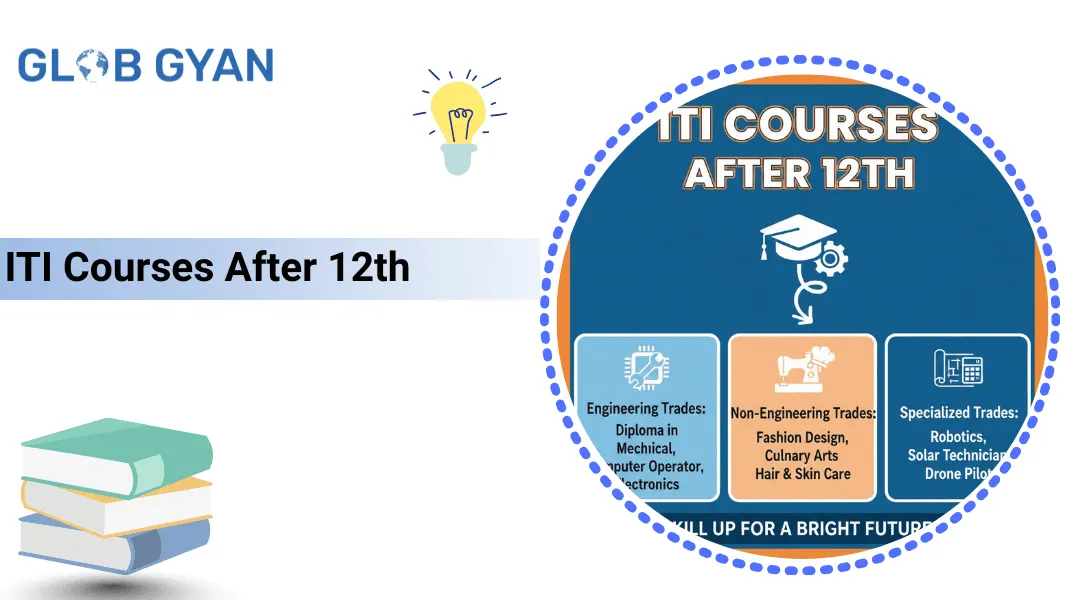
ITI Courses After 12th – Stream-Wise List
ITI Courses After 12th Science
Students from science backgrounds get access to more technical and higher-demand trades.
Popular options include:
- Electrician ITI course after 12th
- Draughtsman Mechanical ITI course after 12th
- Mechanic Diesel ITI course after 12th
- Refrigeration and Air Conditioning ITI
- Fitter Trade
These courses are ideal if you enjoy machines, electrical systems, or technical problem-solving.
ITI Courses After 12th Arts
Arts students often worry about job options, but ITI proves that skills matter more than stream.
Good choices are:
- Computer Operator ITI course after 12th
- Welder ITI course after 12th
- Dress Making
- Plumber
- Surveyor Assistant
These trades focus on employability and practical skills rather than academic theory.
ITI Courses After 12th Commerce
Commerce students can also benefit from ITI, especially in office and service-based trades.
Suitable courses include:
- Stenographer
- Secretarial Assistant
- Computer Operator and Programming Assistant (COPA)
- Information Technology Trade
If you like office work with technical support skills, these are solid options.
Best ITI Courses After 12th (High Demand Trades)
Some trades consistently perform well in terms of job demand and stability.
The best ITI courses after 12th usually include:
- Electrician
- Fitter
- Mechanic Diesel
- Draughtsman (Civil / Mechanical)
- Refrigeration & Air Conditioning Technician
These trades are in demand in factories, construction, power plants, railways, and private companies.
Highest Salary ITI Courses After 12th
Let’s talk money — because that’s a genuine concern.
The highest salary ITI course after 12th depends on skill level, experience, and location, but generally high-paying trades include:
- Draughtsman
- Electrician
- Mechanic Diesel
- Refrigeration & AC Technician
ITI Salary After 12th (Approximate)
- Freshers: ₹10,000 – ₹15,000 per month
- With experience: ₹20,000 – ₹35,000 per month
- Skilled/self-employed professionals can earn more
Salary grows with experience, certifications, and on-site skills — not just the certificate.
ITI Courses After 12th for Girls & Boys
ITI Courses After 12th for Girls
ITI is not gender-specific. Many trades are well-suited for girls, such as:
- Computer Operator
- Stenographer
- Dress Making
- Draughtsman
- Electronics Mechanic
These offer safe work environments and good growth potential.
ITI Courses After 12th for Boys
Boys often prefer physically demanding or industrial trades like:
- Electrician
- Fitter
- Welder
- Mechanic Diesel
- Plumber
But honestly, skills don’t have gender — interest matters more.
ITI Duration and Fees After 12th
ITI Duration After 12th
- Most courses: 1 to 2 years
- Some advanced trades: 2 years
ITI Fees After 12th
- Government ITI: ₹2,000 – ₹10,000 per year
- Private ITI: ₹15,000 – ₹50,000 per year
Government institutes are affordable and widely accepted.
ITI Admission Process After 12th (Step-by-Step)
The ITI admission after 12th process is simple:
- Check eligibility for your chosen trade
- Apply through state ITI admission portal
- Merit-based or entrance-based selection
- Document verification
- Seat allotment and admission
Always prefer NCVT or SCVT approved ITI institutes.
Government vs Private ITI Courses After 12th
Government ITI
- Low fees
- Recognized certification
- Better for government jobs
Private ITI
- Higher fees
- Modern infrastructure (sometimes)
- Faster admission
Both are valid, but government ITIs are usually more trusted.
Career Options & Jobs After ITI 12th
After completing ITI, students can explore:
- ITI jobs after 12th in private companies
- Government jobs after ITI 12th (Railways, PSUs, PWD)
- Apprenticeship programs
- Self-employment or business
- Further studies (Diploma, Advanced certification)
This makes ITI a strong option for building a career after 12 without wasting time.
ITI vs Diploma After 12th – Which Is Better?
ITI
- Skill-based
- Short duration
- Faster employment
Diploma
- More theory
- Longer duration
- Better for higher studies
Choose ITI if you want quick jobs; diploma if you want academic growth.
Advantages & Disadvantages of ITI After 12th
Advantages
- Job-oriented
- Affordable
- Short duration
- Practical skills
Disadvantages
- Limited academic scope
- Depends heavily on skill quality
- Salary grows slowly initially
Being aware helps you make smarter decisions.
Who Should Choose ITI After 12th?
ITI is ideal if you:
- Prefer hands-on work
- Want early income
- Don’t enjoy theory-heavy education
- Want industry-ready skills
Many students discover excellent guidance through platforms like glob gyan, which help simplify technical career decisions.
Final Thoughts
Choosing ITI courses after 12th is not a shortcut — it’s a smart skill-based pathway for students who want practical knowledge, jobs, and independence.
If you focus on the right trade, build strong skills, and keep learning, ITI can open solid career doors without unnecessary pressure.
FAQs
Can I do ITI after 12th?
Yes, many ITI trades are available after 12th.
Which ITI course is best after 12th?
Electrician, Draughtsman, and Mechanic trades are popular.
Is ITI valid for government jobs?
Yes, especially NCVT-approved courses.
Can girls do ITI after 12th?
Absolutely. Many trades are suitable and safe.
What is the age limit for ITI?
Usually minimum 14 years; no strict upper limit in most cases.