




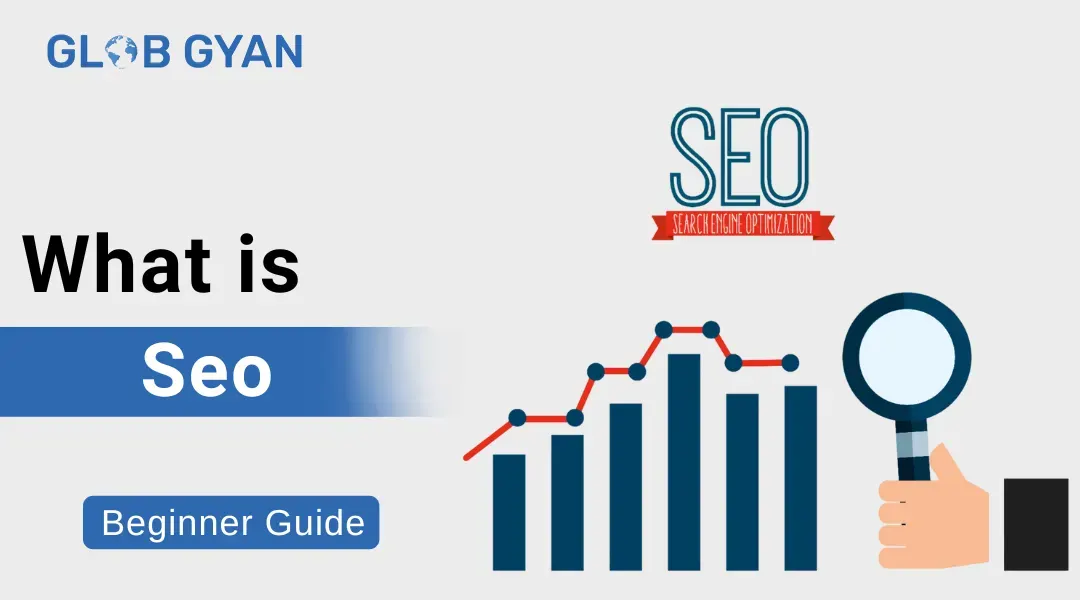
SEO stands for Search Engine Optimization. It is a powerful digital marketing technique that helps search engines like Google and Microsoft Bing understand your website’s content and show it to the right audience when they search for relevant queries.
In simple words, SEO is the process of improving your website so that it can rank higher on search engine results pages (SERPs) and drive more organic search traffic.
The main goal of SEO is to rank your web pages on the first page of Google for valuable keywords, which helps increase online visibility, qualified traffic, leads, and sales.
As a digital marketing learner, I have personally noticed that websites with strong SEO always get consistent traffic compared to websites that only depend on paid ads. That is why SEO is considered a long-term growth strategy.
Why is SEO Important?
SEO is important because most users trust Google search results and click on the top-ranking websites. If your website is not visible on the first page, then your chances of getting traffic are very low.
Here’s why SEO matters in 2026:
- Organic search delivers a major part of website traffic
- SEO improves website visibility
- It helps build trust and authority
- SEO gives long-term results compared to paid ads like Google Ads
- SEO is essential for growing any online business
SEO is also important because search engines are now showing advanced SERP features like:
- AI Overviews
- Knowledge panels
- Featured snippets
- People Also Ask
- Maps
- Images
- Videos
- Top stories (news)
This makes SEO more competitive but also more powerful.
How SEO Works?
SEO works by helping search engines understand your content and decide where your page should rank.
Search engines follow 4 main steps:
1. Crawling: Search engines use crawlers to discover your website pages using links and sitemaps.
2. Rendering: Search engines read your page’s HTML, JavaScript, and CSS to understand how it looks.
3. Indexing: Then search engines store your content in their database. If your page is not indexed, it won’t appear on Google.
4. Ranking: Google uses algorithms and ranking factors to decide which pages should appear at the top of SERPs.
SEO helps improve your chances to rank higher by optimizing your website properly.
Example: If your website is about “digital marketing courses in India” and your content is well-optimized, Google will rank your page higher when users search for that keyword.
SEO vs SEM vs PPC
Many beginners confuse SEO with SEM and PPC, so let’s clear it.
SEO vs SEM: SEM stands for Search Engine Marketing. It includes both SEO and PPC.
- SEO = Organic search results clicks
- SEM = Organic + Paid search results clicks
- PPC = Paid search results clicks
Think of SEM like a coin:
- One side is SEO
- The other side is PPC
SEO vs PPC: PPC (Pay-Per-Click) is a type of digital marketing where advertisers pay whenever someone clicks their ad.
Example: Google Ads
SEO is different because SEO traffic is not directly paid, but it requires time, content, optimization, and effort.
Both SEO and PPC are best when used together for better ROI.
Types of SEO
SEO has different types and specializations. For success, you need a balance of technical work, content work, and off-site strategies.
1. Technical SEO: Technical SEO focuses on optimizing the backend structure of a website to help search engines crawl and index it efficiently. It includes elements like website speed, mobile-friendliness, HTTPS security, proper URL structure, and internal linking. Core Web Vitals and structured data also play an important role in technical performance. Strong technical SEO builds a solid foundation that improves overall ranking potential.
2. On-Page SEO (Content Optimization): On-page SEO involves optimizing the content and HTML elements of a webpage to improve search visibility. It includes title tags, meta descriptions, header tags, keyword placement, image alt text, and content formatting. The content should be unique, informative, updated, and easy to read. Effective on-page SEO helps search engines understand your content and rank it appropriately.
3. Off-Page SEO (Off-Site Optimization): Off-page SEO focuses on improving a website’s authority and reputation outside of the website itself. It includes link building, brand mentions, social media signals, and online reputation management. High-quality backlinks act as trust signals for search engines. Strong off-page SEO enhances credibility and increases domain authority over time.
SEO Specializations (SEO Subgenres)
SEO also has many specialties depending on the business type.
Ecommerce SEO: Ecommerce SEO focuses on optimizing online store elements like product pages, category pages, reviews, and faceted navigation. It also includes structured data and strong internal linking to improve visibility in search results. The goal is to increase product discoverability and drive qualified traffic that converts into sales.
Enterprise SEO: Enterprise SEO is designed for very large websites with thousands or millions of pages and multiple teams involved. It requires advanced strategies, automation, and scalable optimization processes. The focus is on maintaining technical performance, content consistency, and large-scale ranking growth.
International SEO: International SEO helps websites target multiple countries or languages effectively. It involves hreflang implementation, localized content, and region-specific search engine optimization. The goal is to ensure the right content appears for users in the correct geographic location.
Local SEO: Local SEO focuses on improving visibility for location-based searches. It includes optimizing Google Business Profile, managing reviews, and building local citations. The objective is to attract nearby customers searching for local services or businesses.
News SEO: News SEO focuses on fast indexing and visibility in Google News, Discover, and Top Stories. It requires proper technical setup, structured data, and timely content publishing. The goal is to maximize visibility for trending and time-sensitive news content.
What is GEO in SEO? (Generative Engine Optimization)
In 2026, SEO is changing because of AI.
GEO (Generative Engine Optimization) is an emerging field of SEO where content is optimized for AI-driven platforms like:
- Google AI Overviews
- Gemini
- ChatGPT and SearchGPT
- Microsoft Copilot
- Perplexity
This helps websites appear in AI answers, not only in traditional SERPs.
Key SEO Activities to Improve Rankings
To build a successful SEO strategy, you need to focus on these 6 major areas:
1. Understanding Search Engines: You should understand how Google works, including crawling, indexing, rendering, and ranking.
2. Researching: SEO research includes:
- Audience research
- Keyword research
- Competitor research
- SERP analysis
- Website audit
- Brand and business research
3. Planning: An SEO strategy includes:
- Goal setting (SMART goals / OKRs)
- KPIs and metrics
- Tools selection
- Budget planning
- Timeline and milestones
4. Creating and Implementing SEO: This includes:
- Creating new SEO content
- Updating old pages
- Improving internal linking
- Removing outdated content
5. Monitoring and Maintaining: SEO requires monitoring:
- Broken links
- Website speed issues
- Indexing problems
- Traffic drops
6. Reporting and Measuring Results: Use tools like:
- Google Analytics
- Google Search Console
- Bing Webmaster Tools
- SEO platforms like Semrush
Performance reporting helps track improvements.
Quick SEO Checklist for Beginners
If you are new to SEO, follow this simple checklist:
Use the main keyword in the title and first paragraph
Write a clear meta description
Use headings (H1, H2, H3) properly
Add internal linking (example: what is digital marketing)
Add image alt text
Improve page speed and Core Web Vitals
Make the site mobile-friendly
Use structured data / schema
Create helpful and unique content
Build quality backlinks through link building
This checklist is extremely helpful if you want to rank faster.
SEO is Ongoing (SEO Never Ends)
SEO is not a one-time process.
Search engines, algorithms, and user behavior constantly change. Content becomes outdated, websites break, competitors improve, and SERP features evolve.
That’s why SEO requires continuous updates and maintenance.
How SEO is Evolving
SEO is evolving because of technology and society changes.
Major changes in SEO include:
- AI-driven search results
- AI Overviews in Google
- Mobile-first indexing
- Better user experience focus
- Faster websites requirement
- Voice search and mobile taps
Now SEO is also becoming “search experience optimization” or “search everywhere optimization”.
SEO Tools to Learn and Grow
If you want to learn SEO, you should start using free tools like:
- Google Analytics
- Google Search Console
- Bing Webmaster Tools
- Free SEO Checker
- Free Keyword Research Tool
- Free Keyword Difficulty Checker
- Free Keyword Generator
- Free Backlink Research Tool
- SERP Checker
- Competitor Analysis Tool
These tools help in measuring website traffic, keyword ranking, and performance.
Conclusion
SEO (Search Engine Optimization) is one of the most powerful digital marketing strategies in 2026. It helps websites rank higher on Google and other search engines, drive organic search traffic, improve visibility, and build trust.
To succeed, you must focus on technical SEO, on-page SEO, and off-page SEO, along with modern techniques like GEO (Generative Engine Optimization) for AI-driven search.If you want to learn the full foundation of online marketing, don’t forget to read our detailed pillar guide on what is digital marketing, because SEO is one of the most important digital marketing channels today.
Frequently Asked Questions
SEO is the process of improving your website to rank higher on Google and get more organic traffic.
The main goal of SEO is to rank on the first page of SERPs for valuable keywords.
SEO gives organic traffic, while PPC gives paid traffic through ads like Google Ads.
The three main types are Technical SEO, On-page SEO, and Off-page SEO.
Yes, SEO is a major part of digital marketing and helps increase online visibility.