
Navratri is one of the most sacred Hindu festivals dedicated to the nine divine forms of Goddess Durga. Each day of this festival is devoted to a different form of the goddess known as Navdurga. The 3rd day of Navratri is dedicated to Goddess Chandraghanta, a powerful and compassionate form of Durga who symbolizes courage, protection, and divine energy.
On this auspicious day, devotees worship Chandraghanta Devi to remove fear, negativity, and obstacles from life. The name Chandraghanta comes from the half-moon shaped bell (ghanta) present on the goddess’s forehead. This unique symbol represents bravery and divine power.
Devotees across India celebrate Navratri Day 3 Goddess Chandraghanta with prayers, fasting, and rituals to seek blessings for peace, prosperity, and spiritual growth.
Who is Goddess Chandraghanta?
Goddess Chandraghanta is the third form of Maa Durga worshipped during Navratri Day 3. She represents strength, grace, and protection. According to Hindu scriptures, after marrying Lord Shiva, Goddess Parvati appeared in the form of Chandraghanta to destroy evil forces and protect devotees.
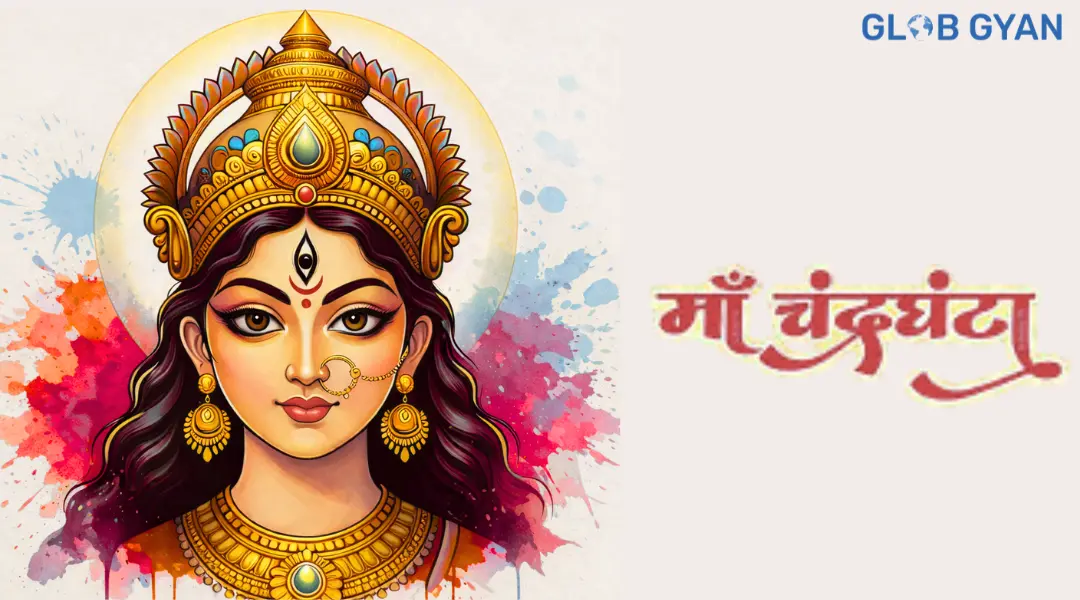
Maa Chandraghanta is often depicted riding a tiger or lion, symbolizing courage and determination. She has ten hands holding different weapons such as trident, mace, sword, and bow, while one hand remains in blessing posture for devotees.
The crescent moon shaped like a bell on her forehead gives her the name Chandraghanta Mata, and it is believed that the sound of this divine bell drives away evil spirits and negative energies.
Devotees worship Devi Chandraghanta for strength, bravery, and success in life.
Chandraghanta Devi Story
The Chandraghanta Mata story is deeply connected to the marriage of Goddess Parvati and Lord Shiva.
According to Hindu mythology, when Lord Shiva arrived for his wedding with Goddess Parvati, he appeared in a fierce and unusual form. His body was covered with ash, he wore serpents around his neck, and ghosts accompanied him.
Parvati’s family and the wedding guests were frightened by Shiva’s terrifying appearance. To calm everyone and restore peace, Parvati transformed into a powerful and radiant form known as Chandraghanta Devi.
In this form, she wore a golden aura and had a crescent moon on her forehead shaped like a bell. The divine sound from the bell symbolized the destruction of evil and the protection of devotees.
After seeing the goddess’s divine form, Lord Shiva appeared in a calm and handsome form, and their marriage was completed peacefully.
Because of this story, Chandraghanta Devi is worshipped as a goddess who removes fear and brings harmony and courage into devotees’ lives.
Significance of the Third Day of Navratri
The third day of Navratri holds great spiritual importance. On this day, devotees focus on developing inner strength, courage, and discipline.
Worshipping Navratri Day 3 Goddess Chandraghanta is believed to:
- Remove fear and negative energy
- Bring courage and confidence
- Protect devotees from evil forces
- Provide peace and mental clarity
- Help overcome life challenges
Devotees also believe that sincere prayers to Maa Chandraghanta help awaken spiritual energy and bring success in life.
Maa Chandraghanta Colour for Navratri Day 3
Each day of Navratri is associated with a specific color. The Maa Chandraghanta colour for the third day of Navratri is Grey.
Why Grey Color?
Grey represents balance, stability, and maturity. It symbolizes calmness and strength during difficult situations.
Wearing grey clothes on Day 3 Navratri is believed to attract the blessings of Chandraghanta Mata and create a positive spiritual environment.
What Color Clothes Should You Wear?
Recommended colors for worship on Navratri Day 3:
- Grey
- Light silver
- White with grey tones
- Soft neutral shades
These colors symbolize peace, devotion, and spiritual balance.
What Colors Should Be Avoided?
While worshipping Chandraghanta Devi, devotees generally avoid:
- Black
- Very dark colors
- Dull or negative shades
These colors are traditionally considered less auspicious during Navratri worship.
Chandraghanta Mata Mantra
Chanting the Chandraghanta mantra on Navratri Day 3 is believed to bring courage, remove fear, and protect devotees from negative energies.
Maa Chandraghanta Mantra:
“ॐ देवी चंद्रघण्टायै नमः”
Chanting this Chandraghanta Mata mantra with devotion during prayer can bring peace, strength, and positivity into life.
Another popular prayer dedicated to Devi Chandraghanta is:
“पिण्डज प्रवरारूढ़ा चण्डकोपास्त्रकेर्युता
प्रसादं तनुते मह्यं चन्द्रघण्टेति विश्रुता”
Regular chanting of these mantras helps devotees connect with the divine energy of the goddess.
Puja Rituals for Navratri Day 3
Devotees follow special rituals to worship Navratri Day 3 Devi with devotion and discipline.
Morning Puja
The day begins with a bath and wearing clean clothes, preferably in the Maa Chandraghanta colour grey.
The puja altar is decorated with flowers, incense, and lamps.
Offerings to the Goddess
Devotees offer:
- Milk
- Kheer
- Sweets
- Fruits
- Flowers
These offerings are believed to please Chandraghanta Mata and bring prosperity.
Chanting and Meditation
Devotees chant the Maa Chandraghanta mantra and meditate on the goddess to receive her blessings.
Fasting is also commonly observed on Day 3 Navratri as a symbol of devotion and spiritual discipline.
What Devotees Should Do on Navratri Day 3
To receive the blessings of Goddess Chandraghanta, devotees should follow certain spiritual practices.
Things You Should Do
- Wake up early and take a holy bath
- Wear clean clothes, preferably grey
- Offer flowers and sweets to the goddess
- Chant the Chandraghanta mantra
- Practice meditation and positive thinking
- Help people in need and perform good deeds
These actions create a positive spiritual environment and strengthen devotion.
What Devotees Should Avoid
Certain actions are traditionally avoided during Navratri Day 3 to maintain spiritual purity.
Things You Should Not Do
- Avoid consuming non-vegetarian food
- Avoid alcohol and harmful habits
- Do not speak harsh or negative words
- Avoid anger and negative thinking
- Avoid wearing black clothes during puja
Following these guidelines helps maintain purity and respect during Navratri worship.
Puja Timing for Navratri Day 3 (Goddess Chandraghanta Puja Time)
The worship of Goddess Chandraghanta on the 3rd day of Navratri is usually performed in the morning during the Pratah Kaal (early morning), which is considered the most auspicious time for offering prayers.
Devotees wake up early, take a holy bath, and begin the puja after sunrise. The ideal Chandraghanta Mata puja timing is generally between 6:00 AM to 11:00 AM, though devotees can also pray later in the day if morning worship is not possible.
During the puja, devotees place the idol or image of Chandraghanta Devi on a clean altar, light a diya, offer flowers, fruits, and sweets, and chant the Chandraghanta mantra with devotion.
Many devotees also meditate and recite Durga Chalisa or Durga Saptashati to receive the blessings of Navratri Day 3 Goddess Chandraghanta.
What to Eat on Navratri Day 3
Food offered and consumed during Navratri Day 3 is usually sattvic (pure and vegetarian). Devotees observing fast prepare special vrat food that is light and spiritually pure.
Some foods commonly eaten during the worship of Maa Chandraghanta include:
- Sabudana khichdi
- Kuttu atta roti or puri
- Singhare ka atta dishes
- Fruits like banana, apple, and papaya
- Milk and dairy products
- Kheer made with milk
- Dry fruits like almonds and raisins
These foods are believed to keep the body energized while maintaining spiritual purity during fasting.
Offering milk, sweets, and kheer to Chandraghanta Mata is considered especially auspicious on the third day of Navratri.
Spiritual Benefits of Worshipping Maa Chandraghanta
Devotees believe that worshipping Maa Chandraghanta brings many spiritual and personal benefits.
Some of these benefits include:
- Removal of fear and negativity
- Increase in courage and confidence
- Protection from evil energies
- Mental peace and stability
- Success and prosperity in life
Because of these blessings, Navratri 3rd Day Devi is widely worshipped across India during Navratri.
If you want to understand how Navratri rituals affect different zodiac signs, you can also explore our guide on 12 Rashi and the spiritual significance of Chaitra Navratri 2026.
Conclusion
The worship of Goddess Chandraghanta on the third day of Navratri represents courage, protection, and spiritual power. Her divine form reminds devotees that strength and compassion can coexist.
By praying to Chandraghanta Devi, devotees seek protection from negativity and the courage to overcome life’s challenges. Wearing the right colors, chanting the Chandraghanta Mata mantra, and performing sincere prayers can bring peace, prosperity, and spiritual growth.
Celebrating Navratri Day 3 Goddess Chandraghanta with devotion allows devotees to connect with divine energy and experience inner transformation.
FAQs About Goddess Chandraghanta
Goddess Chandraghanta is the third form of Maa Durga worshipped on Navratri Day 3. She symbolizes courage, protection, and the destruction of evil forces.
Chandraghanta Devi is worshipped on the third day of Navratri, also known as Navratri Day 3 Devi.
The auspicious Maa Chandraghanta colour for Navratri Day 3 is Grey, symbolizing balance, strength, and stability.
The most popular Chandraghanta mantra is:
“ॐ देवी चंद्रघण्टायै नमः”
This mantra is chanted to seek protection, courage, and peace.
Worshipping Chandraghanta Mata is believed to remove fear, bring courage, protect devotees from negative energies, and provide peace and prosperity.