




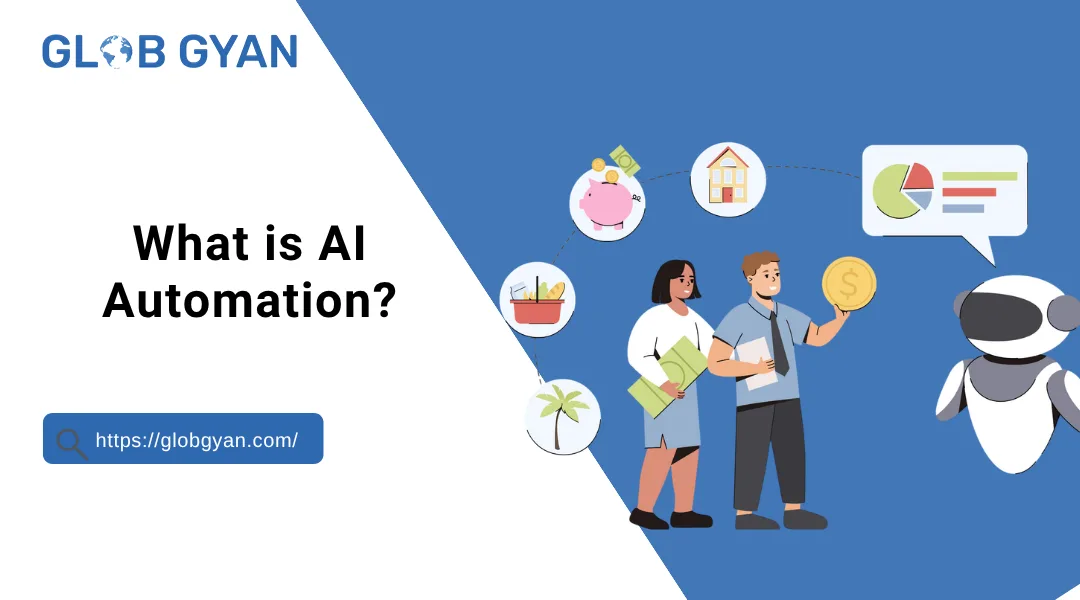
What is AI automation is one of the most searched questions today as businesses and individuals are rapidly adopting artificial intelligence to automate their work and improve efficiency.
AI is no longer just a buzzword, it has become a powerful technology that is transforming how businesses operate in the modern digital world. From startups to large companies, everyone is now using artificial intelligence and automation to save time, reduce manual effort, and increase productivity.
When we talk about AI & automation, we are referring to a smart combination of technologies that can perform tasks automatically while also thinking, learning, and improving over time. This is what makes AI different from traditional automation.
What is AI Automation?
What is AI automation is one of the most important questions in today’s digital world, as businesses are rapidly shifting towards AI & automation to improve efficiency and growth.
AI automation refers to using artificial intelligence to automate tasks, processes, and workflows that normally require human intelligence. It is a powerful combination of intelligent technologies that allows machines to think, learn, and act on their own.
In simple terms:
AI and Automation = Smart systems that think, learn, and act automatically
This concept is also known as automated intelligence, where machines are not just following instructions but actually making smart decisions based on data.
This is an overview of how AI automation works.
To understand this concept clearly, it helps to see how different technologies work together behind the scenes. Instead of being a single system, it combines multiple intelligent components that function in a structured way.
In simple terms, it allows machines to think, learn, make decisions, and take action automatically without constant human involvement.
Let’s break it down step by step.
Artificial Intelligence – The Brain of AI Automation
When we talk about this system, the most important component is Artificial Intelligence (AI). It acts as the brain, handling thinking, understanding, and decision-making within the process.
Without it, automation would simply follow fixed instructions. But with AI, machines become smarter they can analyze situations and take actions more intelligently.
What Does Artificial Intelligence Do in AI Automation?
Artificial Intelligence gives machines the ability to behave like humans in many ways. It allows systems to:
Understand Information
AI can read and understand different types of data such as text, images, and voice.
For example:
- A chatbot understands what a user is asking
- Voice assistants understand spoken commands
This is a key part of AI for automation, where systems interact naturally with users.
Analyze Data
AI can process large amounts of data very quickly.
It can:
- Identify patterns
- Find hidden insights
- Compare past and present data
For example:
- AI analyzes customer behavior on a website
- It studies which products users like the most
This helps businesses make better decisions using AI business automation.
Make Decisions
One of the most powerful features of AI is decision-making.
Instead of just following rules, AI can:
- Evaluate different situations
- Choose the best possible action
- Adapt based on data
For example:
- AI decides which email to send to a customer
- It selects the best product recommendations
This is what makes AI automation more advanced than traditional automation.
Solve Problems
AI systems can also solve complex problems by using logic and data.
They can:
- Detect errors
- Predict issues
- Suggest solutions
For example:
- AI detects fraud in banking transactions
- It identifies errors in systems automatically
Machine Learning (ML) – The Learning Power of AI Automation
To understand this better, it’s impossible to ignore the role of Machine Learning (ML). It is a core part of artificial intelligence and works as the learning engine behind intelligent systems.
While AI acts as the brain, Machine Learning enables it to learn from data and improve automatically over time.
What is Machine Learning in AI Automation?
Machine Learning is a subset of AI that allows systems to learn from data instead of being manually programmed again and again.
In simple words:
Machine Learning helps machines learn from experience, just like humans do.
Instead of following fixed instructions, ML-based systems:
- Learn from past data
- Identify patterns
- Adapt to new situations
- Improve their performance continuously
How Machine Learning Works in AI Automation
In AI for automation, Machine Learning works behind the scenes to make systems smarter.
It allows systems to:
🔹 Learn from Data: ML algorithms analyze large amounts of data and learn from it.
🔹 Identify Patterns: They detect trends and patterns that humans may not easily notice.
🔹 Improve Over Time: With more data, the system becomes more accurate and efficient.
🔹 Make Better Decisions: ML helps AI systems make smarter and more data-driven decisions without manual updates.
Automation Technologies – The Action System of AI Automation
To understand this clearly, it’s important to recognize that automation is the part that actually gets the work done. While Artificial Intelligence acts as the brain and Machine Learning helps systems learn, automation is what executes tasks and turns decisions into action.
In simple words:
Automation turns decisions into real actions.
Without automation, AI can think and decide—but it cannot perform tasks. This is why automation is a critical part of AI & automation systems.
What Do Automation Technologies Do?
Automation technologies are responsible for carrying out tasks without human involvement. Once AI makes a decision, automation ensures that the task is completed quickly and efficiently.
Automation systems can:
- Perform actions instantly
- Complete full workflows step-by-step
- Trigger processes based on conditions
- Deliver results without manual input
This is how AI for automation becomes practical in real-world applications.
AI & Automation: Why It Matters in Today’s Digital World
In today’s fast-changing digital environment, understanding what is AI automation is not enough—you also need to know why AI & automation matter so much.
The combination of AI & automation is transforming industries across the world. From small businesses to large enterprises, organizations are now using AI for automation to work faster, smarter, and more efficiently.
Simply put:
AI provides intelligence, and automation executes tasks together, they create powerful systems that improve how businesses operate.
How AI & Automation Are Changing Industries
The integration of artificial intelligence and automation is creating a major shift in how work is done. Let’s understand its impact in detail.
1. Reducing Manual Work
One of the biggest advantages of AI automation is that it reduces the need for repetitive manual tasks.
Earlier:
- Employees had to handle data entry, emails, and reports manually
Now:
- AI systems automate these tasks automatically
This allows people to focus on more important and creative work.
2. Increasing Efficiency
With AI business automation, tasks are completed much faster compared to manual processes.
- Work that takes hours can now be done in seconds
- Processes run smoothly without delays
- Multiple tasks can be handled at the same time
This leads to higher productivity and better business performance.
3. Improving Accuracy
Human errors are common in manual work, especially when handling large amounts of data.
But with AI & automation:
- Tasks are performed consistently
- Errors are minimized
- Data processing becomes more reliable
This is why businesses trust AI automation services for critical operations.
4. Enabling Smarter Decision-Making
AI systems can analyze large amounts of data and provide useful insights.
This helps businesses:
- Understand customer behavior
- Predict future trends
- Make data-driven decisions
This is one of the most powerful benefits of using AI for automation.
How AI Automation Works
To fully understand what is AI automation, it is important to know how it actually works behind the scenes. AI automation is not just a single action—it is a step-by-step process where different technologies work together to complete tasks automatically.
In simple words, AI & automation follow a structured workflow where data is collected, analyzed, decisions are made, and tasks are executed without human involvement.
Let’s understand each step in detail.
1. Data Collection – The Foundation of AI Automation
When understanding what is AI automation, the very first and most important step is data collection. Without data, AI systems cannot function properly.
In simple words:
Data is the fuel that powers AI automation.
AI systems need large amounts of data to learn, analyze, and make decisions. The quality and quantity of data directly affect how well an AI system performs.
What is Data Collection in AI Automation?
Data collection is the process of gathering information from different sources so that AI systems can understand patterns and make intelligent decisions.
In AI & automation, data is collected continuously from various channels to ensure the system stays updated and accurate.
Sources of Data in AI Automation
AI systems collect data from multiple sources, such as:
🔹 Users
- Website activity (clicks, searches, time spent)
- Form inputs
- Purchase behavior
🔹 Systems
- Databases
- CRM tools
- Software applications
🔹 Interactions
- Emails
- Chat conversations
- Customer support tickets
- Transactions
Types of Data in AI Automation
AI systems work with different types of data:
🔸 Structured Data
- Organized and easy to process
- Examples: spreadsheets, tables, numbers
🔸 Unstructured Data
- Complex and not organized
- Examples: text, images, videos, voice
Modern AI automation systems are powerful because they can handle both types of data.
2. Data Processing & Learning – Making AI Automation Intelligent
Once you understand the basics and how data is collected, the next step is data processing and learning. This is where raw data is transformed into meaningful information, allowing systems to become smarter over time.
In simple words:
Data processing turns raw data into knowledge, and learning makes AI improve over time.
What is Data Processing in AI Automation?
Once data is collected, it is usually messy and unorganized. AI systems cannot directly use this raw data.
So, the first step is to:
- Clean the data (remove errors and duplicates)
- Organize the data (structure it properly)
- Convert it into a usable format
This step ensures that AI systems can understand the data correctly in AI for automation.
Role of Machine Learning in This Step
In AI automation, Machine Learning (ML) plays a major role in processing and learning from data.
Machine Learning helps systems to:
🔹 Learn from Data: AI studies past data to understand behavior and patterns.
🔹 Identify Patterns and Trends: It finds hidden patterns that humans may not easily notice.
🔹 Improve Performance Over Time: With more data, the system becomes more accurate and efficient.
🔹 Make Better Decisions: AI systems can make smarter and faster decisions without manual update
3. Decision Making – The Intelligence of AI Automation
Once the basics are clear and the data has been collected and processed, the next step is decision-making. This is where systems analyze information and choose the most appropriate action.
In simple words:
Decision making is where AI uses data to choose the best possible action. This step is what makes AI & automation truly powerful and different from traditional automation.
What is Decision Making in AI Automation?
In AI automation, decision making means analyzing processed data and selecting the most suitable action based on insights.
Unlike traditional systems that follow fixed rules, AI systems can:
- Evaluate different situations
- Predict possible outcomes
- Choose the best action automatically
This is why AI for automation is smarter and more flexible than basic automation.
How AI Makes Decisions
AI systems follow a smart process to make decisions:
🔹 Analyze Data: AI studies the processed data and understands patterns.
🔹 Evaluate Options: It checks different possible actions or outcomes.
🔹 Predict Results: AI uses past data to predict what will happen next.
🔹 Choose the Best Action: Finally, it selects the most effective decision.
4. Automation Execution – Turning Decisions into Real Action
Once the concept is clear, the final and most practical step is automation execution. This is where everything comes together and actual work gets done.
In simple words:
Automation execution means taking action based on AI decisions. Once AI analyzes data and makes a decision, automation ensures that the task is completed automatically without any human effort.
What is Automation Execution in AI Automation?
In AI & automation, automation execution is the step where systems:
- Perform tasks automatically
- Trigger workflows
- Deliver final results
This is what makes AI for automation useful in real-world applications. Without this step, AI can only think and decide but cannot actually perform tasks.
What Happens in Automation Execution?
During this step, the system performs multiple actions automatically:
🔹 Performing Tasks Automatically: Tasks are completed without manual effort.
🔹 Triggering Workflows: Processes start automatically based on conditions or decisions.
🔹 Delivering Results: The final output is generated and delivered instantly.
Key Technologies Behind AI Automation
To fully understand what is AI automation, it is important to know the key technologies that make it possible. AI automation is not built on a single system—it works because of multiple advanced technologies working together.
In simple words:
These technologies are the engine that powers AI & automation systems.
Let’s understand each technology in detail.
1. Machine Learning (ML) – The Learning Engine
Machine Learning is one of the most important technologies in AI automation.
It allows systems to:
- Learn from data
- Identify patterns
- Improve performance over time
- Make better decisions automatically
Example:
- AI analyzes customer behavior
- Learns user preferences
- Recommends products more accurately over time
This is why Machine Learning is the backbone of AI business automation.
2. Natural Language Processing (NLP) – Understanding Human Language
Natural Language Processing (NLP) helps AI systems understand and communicate in human language.
It enables systems to:
- Read and understand text
- Process voice commands
- Generate human-like responses
Example:
- Chatbots answering customer queries
- Voice assistants responding to commands
- AI writing emails or messages
NLP makes AI for automation more interactive and user-friendly.
3. Computer Vision – Understanding Images and Videos
Computer Vision allows AI systems to see and analyze visual data like humans.
It helps systems to:
- Recognize images and objects
- Analyze videos
- Detect patterns in visuals
Example:
- Face recognition systems
- Quality checks in factories
- Medical image analysis
This technology expands the power of AI & automation beyond text and data.
4. Predictive Analytics – Forecasting the Future
Predictive Analytics uses past data to predict future outcomes.
It helps AI systems to:
- Analyze trends
- Forecast future behavior
- Reduce risks
- Improve decision-making
Example:
- Predicting customer purchases
- Forecasting sales trends
- Detecting fraud before it happens
This makes AI automation proactive instead of reactive.
AI Automation vs Traditional Automation
To understand this better, it helps to compare it with traditional automation. While both aim to reduce manual work, AI-powered automation is far more advanced, flexible, and intelligent.
Below is a detailed comparison table:
Comparison Table: AI Automation vs Traditional Automation
| Feature | Traditional Automation | AI Automation |
| Rules | Works on fixed, predefined rules | Works on adaptive rules that can change based on data |
| Decision Making | ❌ Cannot make decisions (follows instructions only) | ✅ Can analyze data and make intelligent decisions |
| Data Handling | Works only with structured data (tables, numbers) | Works with both structured and unstructured data (text, images, voice) |
| Learning Ability | ❌ No learning capability | ✅ Continuously learns and improves using Machine Learning |
| Flexibility | ❌ Limited flexibility | ✅ Highly flexible and adaptable |
| Complex Task Handling | ❌ Can handle only simple tasks | ✅ Can handle complex workflows and processes |
| Error Handling | ❌ Cannot adapt to errors easily | ✅ Can detect, learn, and improve from errors |
| Scalability | ❌ Difficult to scale | ✅ Easily scalable with business growth |
| Efficiency | Moderate efficiency | High efficiency with faster results |
| Real-Time Processing | ❌ Limited or slow | ✅ Real-time data processing and decision-making |
AI Automation Examples
To truly understand what is AI automation, it’s important to look at real-world applications. These examples show how AI & automation are used in different industries to improve efficiency, reduce manual work, and deliver better results.
1. Customer Support Automation
One of the most common and powerful AI automation examples is customer support automation. In today’s digital world, businesses need to respond to customers quickly, and this is where AI for automation plays a major role.
AI-powered systems like chatbots and virtual assistants are designed to handle customer queries automatically without human involvement.
How AI is Used in Customer Support
In AI & automation, customer support systems are trained using data and machine learning to understand user queries and respond accurately.
These systems can:
🔹 Answer Customer Queries Instantly: AI chatbots can reply within seconds, reducing waiting time for customers.
🔹 Provide 24/7 Support: Unlike human agents, AI systems work all the time without breaks.
🔹 Handle Multiple Users at Once: AI can manage thousands of conversations simultaneously without slowing down.
2. Marketing Automation
Another powerful example of what is AI automation in real life is marketing automation. Today, businesses use AI business automation to improve their marketing strategies and reach the right audience at the right time.
Marketing used to be manual and time-consuming. But now, with AI & automation, businesses can automate campaigns, personalize content, and improve results without much human effort.
How AI is Used in Marketing Automation
In AI for automation, marketing systems use data and machine learning to understand customer behavior and automate marketing activities.
AI helps marketers to:
🔹 Send Personalized Emails: AI analyzes user data and sends emails based on individual preferences.
🔹 Run Targeted Ad Campaigns: AI shows ads to the right audience based on their interests and behavior.
🔹 Segment Customers: AI divides users into groups based on:
- Interests
- Behavior
- Purchase history
3. Finance & Banking Automation
Another powerful real-world example of what is AI automation is its use in the finance and banking sector. Banks and financial institutions are using AI & automation to improve security, speed, and accuracy in their operations.
In today’s digital world, financial transactions happen every second. Managing this manually is difficult, so businesses rely on AI for automation to handle complex financial tasks efficiently.
How AI is Used in Finance & Banking
In AI automation, financial systems use data analysis and machine learning to monitor activities and automate processes.
AI systems can:
🔹 Detect Fraud in Real-Time: AI continuously monitors transactions and detects unusual behavior instantly.
🔹 Monitor Suspicious Activities: It identifies patterns that may indicate fraud or security risks.
🔹 Automate Financial Processes: AI automates tasks like:
- Payments
- Reports
- Account management
4. Healthcare Automation
Another powerful real-world example of what is AI automation is its use in the healthcare industry. Today, hospitals and medical organizations are rapidly adopting artificial intelligence and automation to improve patient care, increase accuracy, and save time.
Healthcare involves a lot of data, complex decisions, and critical processes. That’s why AI & automation are helping doctors and healthcare professionals work more efficiently and make better decisions.
How AI is Used in Healthcare Automation
In AI automation, healthcare systems use advanced technologies like machine learning and data analysis to automate medical processes and assist doctors.
AI is commonly used for:
🔹 Medical Image Analysis
AI can analyze medical images like:
- X-rays
- MRI scans
- CT scans
It helps in detecting diseases quickly and accurately.
🔹 Patient Data Management
AI systems can:
- Store and manage patient records
- Analyze patient history
- Provide useful insights for treatment
This reduces manual work and improves efficiency.
🔹 Disease Prediction
AI can predict diseases based on:
- Patient data
- Medical history
- Symptoms
5. Industrial Automation (Smart Manufacturing)
Another powerful real-world example of what is AI automation is its use in industries, especially in smart manufacturing. Today, factories are becoming smarter by using AI & automation to improve productivity, reduce costs, and increase efficiency.
This concept is often referred to as industrial automation automation, where machines, systems, and robots work together with AI to perform tasks automatically with high precision.
How AI is Used in Industrial Automation
In AI automation, industries use intelligent systems to manage and control production processes without constant human involvement.
AI-powered systems can:
🔹 Monitor Machines in Real-Time
AI continuously tracks machine performance and working conditions.
- Detects unusual behavior
- Monitors efficiency
- Ensures smooth operations
🔹 Predict Failures (Predictive Maintenance)
One of the biggest advantages of AI for automation is predictive maintenance.
AI can:
- Analyze machine data
- Predict when a machine might fail
- Suggest maintenance before breakdown
🔹 Control Robots for Production
AI-powered robots are widely used in smart factories.
They can:
- Perform repetitive tasks
- Work with high precision
- Maintain consistent quality
Using AI for Automation in Business
To fully understand what is AI automation, it is important to see how businesses are actually using it in real life. Today, companies of all sizes are adopting AI for automation to improve their work, save time, and increase profits.
From small startups to large enterprises, AI & automation are helping businesses become faster, smarter, and more efficient.
How Businesses Use AI for Automation
Businesses are actively using AI business automation in different areas to streamline their operations.
Let’s understand this in detail.
🔹 Automate Repetitive Tasks
One of the biggest uses of AI automation is handling repetitive tasks.
AI can automate:
- Data entry
- Email responses
- Scheduling
- Report generation
This reduces manual work and allows employees to focus on more important tasks.
🔹 Improve Customer Experience
With artificial intelligence and automation, businesses can provide better and faster customer service.
AI helps to:
- Respond to customer queries instantly
- Provide personalized recommendations
- Offer 24/7 support
This leads to higher customer satisfaction and engagement.
🔹 Optimize Business Operations
AI systems analyze data and improve workflows automatically.
They can:
- Identify inefficiencies
- Suggest improvements
- Optimize processes
This makes operations smoother and more effective using AI for automation.
🔹 Reduce Costs
By automating tasks and improving efficiency, businesses can reduce operational costs.
AI helps in:
- Minimizing manual labor
- Reducing errors
- Saving time
Benefits of AI Automation
After understanding what is AI automation, the next important thing is to know its benefits. Today, businesses are rapidly adopting AI for automation because it helps them work faster, smarter, and more efficiently.
1. Increased Efficiency
One of the biggest advantages of what is AI automation is increased efficiency. In today’s fast-paced digital world, businesses need to complete tasks quickly and accurately, and this is where AI for automation plays a major role.
In simple words:
AI automation helps businesses do more work in less time with better results.
How AI Automation Improves Efficiency
AI-powered systems are designed to work faster and smarter than humans. With the help of AI & automation, businesses can significantly improve their productivity.
AI systems can:
🔹 Complete Tasks Much Faster Than Humans
AI can process large amounts of data in seconds, which would take hours or even days for humans.
Example:
- AI can analyze thousands of customer records instantly
- It can generate reports within seconds
🔹 Handle Multiple Tasks at the Same Time
Unlike humans, AI systems can perform multiple tasks simultaneously without slowing down.
Example:
- Responding to hundreds of customer queries at once
- Running multiple marketing campaigns together
🔹 Work Without Breaks (24/7 Operation)
AI systems can work continuously without rest, unlike humans.
Example:
- Chatbots provide customer support 24/7
- Systems monitor operations all the time
2. Cost Reduction
Another major benefit of what is AI automation is cost reduction. Businesses today are constantly looking for ways to reduce expenses while maintaining high performance, and this is where AI business automation becomes very valuable.
In simple words:
AI automation helps businesses save money by reducing manual work and improving efficiency.
How AI Automation Reduces Costs
With the help of AI for automation, companies can optimize their operations and cut unnecessary expenses.
AI helps businesses in the following ways:
🔹 Reduce Manual Labor
AI automation can handle repetitive and time-consuming tasks that were previously done by humans.
These tasks include:
- Data entry
- Customer support
- Report generation
This reduces the need for large teams and lowers labor costs.
🔹 Lower Operational Costs
AI systems can automate entire workflows, which reduces the cost of running daily operations.
For example:
- Automated systems handle customer queries
- AI tools manage marketing campaigns
- Systems process transactions automatically
This makes business operations more cost-effective using AI & automation.
🔹 Minimize Errors and Losses
Human errors can lead to financial losses, especially in areas like data handling and transactions.
AI systems:
- Follow accurate processes
- Reduce mistakes
- Improve consistency
3. Better Accuracy
Another important benefit of what is AI automation is better accuracy. In traditional systems, human errors are very common—especially when tasks are repetitive, time-consuming, or involve large amounts of data.
But with AI automation, accuracy improves significantly because machines follow data-driven processes instead of manual guesswork.
In simple words:
AI automation reduces mistakes and delivers more reliable results.
How AI Automation Improves Accuracy
AI systems are designed to work with precision and consistency. With the help of AI for automation, businesses can achieve highly accurate results in their operations.
AI systems:
🔹 Follow Data-Driven Processes
AI makes decisions based on data, not assumptions.
- It analyzes large datasets
- Uses logic and patterns
- Produces accurate outcomes
This is why AI business automation is trusted in critical tasks.
🔹 Reduce Human Errors
Humans can make mistakes due to fatigue, distractions, or repetitive work.
AI systems:
- Work without getting tired
- Follow fixed processes
- Minimize errors
This makes AI & automation more reliable than manual work.
🔹 Deliver Consistent Results
Consistency is very important in business operations.
AI ensures:
- Same quality output every time
- No variation in performance
- Reliable execution of tasks
4. Scalability
Another important benefit of what is AI automation is scalability. As businesses grow, managing operations, customers, and data becomes more complex. But with AI for automation, scaling a business becomes much easier and more efficient.
How AI Automation Supports Scalability
With the help of AI & automation, businesses can expand their operations smoothly without facing major challenges.
AI systems can:
🔹 Handle Increased Workload
As business grows, tasks and data also increase.
AI systems can:
- Process large volumes of data
- Handle more tasks without slowing down
- Manage increased demand easily
This makes AI business automation highly scalable.
🔹 Manage More Users and Data
Growing businesses need to handle more customers and information.
AI helps to:
- Serve thousands of users at the same time
- Manage large databases efficiently
- Provide consistent service to all users
This is a key advantage of artificial intelligence and automation.
🔹 Expand Without Extra Effort
Unlike traditional systems, AI does not require proportional increases in resources.
Businesses can:
- Expand operations without hiring more staff
- Automate new processes easily
- Scale globally with minimal effort
AI vs Traditional Scaling
| Feature | Traditional System | AI Automation |
| Growth Handling | Difficult | Easy |
| Resource Requirement | High | Low |
| Performance | Decreases with load | Remains stable |
| Cost | Increases | Optimized |
5. Smart Decision-Making
One of the most powerful benefits of what is AI automation is smart decision-making. In today’s data-driven world, making the right decisions quickly is very important for business success. This is where AI for automation plays a major role.
In simple words:
AI automation helps businesses make smarter, faster, and data-driven decisions.
How AI Helps in Decision-Making
With the help of AI & automation, businesses can analyze huge amounts of data and get meaningful insights that are not easily visible to humans.
AI systems can:
🔹 Analyze Large Amounts of Data
AI can process massive datasets within seconds.
- It collects and analyzes data from multiple sources
- Handles both structured and unstructured data
- Finds useful insights quickly
This makes AI business automation very powerful for decision-making.
🔹 Identify Trends and Patterns
AI can detect patterns that humans may miss.
- It tracks customer behavior
- Identifies buying trends
- Understands market changes
This helps businesses plan better strategies using artificial intelligence and automation.
🔹 Predict Future Outcomes
AI uses past data to predict future results.
- Forecasts sales trends
- Predicts customer behavior
- Identifies potential risks
AI vs Human Decision-Making
| Feature | Human Decisions | AI Automation Decisions |
| Speed | Slow | Fast |
| Accuracy | Depends on experience | Data-driven |
| Data Handling | Limited | Massive data handling |
| Prediction Ability | Limited | Advanced |
Challenges of AI Automation
While understanding what is AI automation, it is equally important to know that it also comes with some challenges. Even though AI & automation provide many benefits, businesses may face certain difficulties when implementing and managing these systems.
In simple words:
AI automation is powerful, but it requires proper planning and management.
Let’s explore the main challenges in detail.
🔹 1. High Implementation Cost
One of the biggest challenges of AI automation is the initial cost.
Businesses need to invest in:
- Advanced AI tools and software
- Infrastructure and systems
- Skilled professionals
For small businesses, this can be expensive at the beginning.
However, over time, AI business automation helps recover these costs through efficiency and savings.
🔹 2. Data Dependency
AI systems depend heavily on data to function properly.
- More data = better performance
- Poor data = inaccurate results
If the data is:
- Incomplete
- Incorrect
- Biased
Then the AI system may give wrong outputs.
This is why data quality is very important in AI for automation.
🔹 3. Integration Issues
Integrating AI with existing systems can be complex.
Businesses may face:
- Compatibility issues
- Technical challenges
- Time-consuming setup
Especially for companies using old systems, integration can be difficult.
This is a common challenge in adopting artificial intelligence and automation.
🔹 4. Ethical and Privacy Concerns
AI systems handle sensitive data, which raises ethical concerns.
Issues include:
- Data privacy risks
- Bias in AI decisions
- Lack of transparency
AI Automation Services
After understanding what is AI automation, it is important to know how businesses actually implement it. Today, many companies provide AI automation services that help organizations automate their processes, improve efficiency, and grow faster.
In simple words:
AI automation services are solutions that help businesses use AI to automate tasks and workflows.
These services are widely used in modern AI & automation strategies across industries.
Types of AI Automation Services
Businesses can choose from different types of AI automation services based on their needs.
🔹 Workflow Automation
Workflow automation focuses on automating complete business processes from start to finish.
It helps businesses to:
- Automate repetitive tasks
- Manage workflows efficiently
- Reduce manual effort
Example:
- Automatically processing orders
- Managing approvals without human input
🔹 Chatbot Development
Chatbots are one of the most popular AI automation examples.
Businesses use chatbots to:
- Handle customer queries
- Provide instant support
- Improve user experience
Example:
- AI chatbots answering customer questions on websites
This is a practical use of AI for automation in customer service.
🔹 AI-Powered Analytics
AI analytics services help businesses understand data and make better decisions.
These systems can:
- Analyze large datasets
- Identify trends and patterns
- Provide actionable insights
Example:
- Predicting customer behavior
- Forecasting sales trends
This improves decision-making using artificial intelligence and automation.
🔹 Business Process Automation
This service focuses on automating core business operations.
It includes:
- Data management
- Financial processes
- Marketing workflows
Example:
- Automating invoice processing
- Managing customer data automatically
Conclusion
Now you clearly understand what is AI automation and why it is becoming so important in today’s digital world. From automating simple tasks to handling complex business processes, AI & automation are transforming how work is done.AI automation is not just a trend, it has become a necessity for anyone who wants to grow, save time, and stay competitive. Businesses that adopt AI for automation early are able to work faster, reduce costs, and make smarter decisions.
FAQs
AI automation means using artificial intelligence to perform tasks automatically without human effort. It helps systems think, learn, and complete tasks on their own.
AI automation works by collecting data, analyzing it using machine learning, making decisions, and then performing tasks automatically. It also improves over time with new data.
Automation follows fixed rules, while AI automation can learn, adapt, and make decisions. AI adds intelligence to basic automation.
AI automation is used in many industries like:
Customer support
Marketing
Healthcare
Finance
Manufacturing
Common examples include:
Chatbots answering customer queries
Email marketing automation
Fraud detection systems
Product recommendation systems
AI automation services help businesses automate tasks and processes using AI technologies like chatbots, analytics, and workflow automation tools.
AI automation helps to:
Save time
Reduce costs
Improve accuracy
Increase productivity
Make better decisions
Yes, AI automation is safe if used properly. However, businesses should manage data privacy, security, and ethical concerns carefully.
Yes, small businesses can easily use AI automation tools to automate tasks, improve efficiency, and grow faster without large investments.
Yes, AI automation is the future. It is rapidly growing and will become an essential part of every business and industry.