




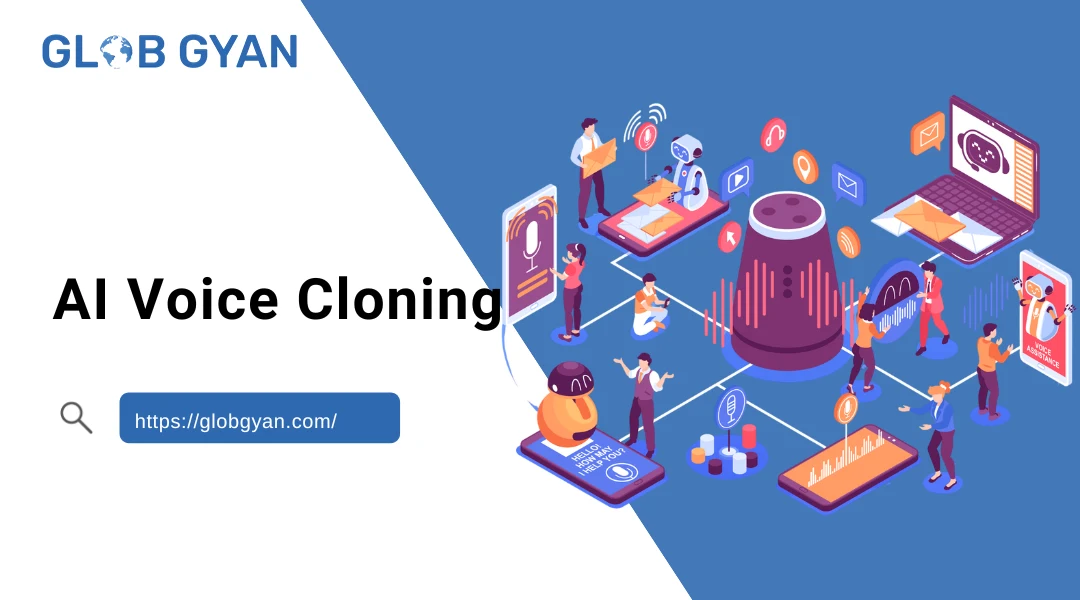
Artificial Intelligence is transforming how people create and consume audio content. One of the most impressive examples is AI Voice Cloning, a technology that can replicate a person’s voice and generate entirely new speech that sounds remarkably similar to the original speaker.
Just a few years ago, creating professional voiceovers required expensive recording equipment, studio time, and voice actors. Today, AI voice cloning technology allows creators, businesses, educators, and developers to generate high-quality speech from a simple text prompt.
From YouTube videos and podcasts to customer service systems and accessibility tools, voice cloning AI is changing the way organizations communicate. At the same time, it raises important questions about privacy, consent, deepfake audio, and cybersecurity risks.
What Is AI Voice Cloning?
Let’s get the vocabulary right first, because this is where most people’s confusion starts. AI voice cloning, voice synthesis, and voice changing are three different things and most articles use them interchangeably, which causes real problems when you’re trying to figure out what you actually need.
| Term | What It Actually Means | Example |
| AI Voice Cloning | Replicating a specific real person’s voice so an AI can speak new text in that voice | Cloning your own voice to narrate a course you didn’t have time to record |
| Voice Synthesis (TTS) | Generating a new, original voice that doesn’t belong to any real person | ElevenLabs’ library of pre-built voices you can pick and use immediately |
| Voice Changing | Modifying your voice in real time as you speak — different pitch, accent, or character | Streamers using voice changers to sound like different characters live on Twitch |
AI voice cloning specifically requires a reference and audio sample of the real voice you want to replicate. The AI analyzes that sample, learns its unique characteristics (pitch, pacing, timbre, accent, breath patterns), and builds a model it can then use to generate new speech in that voice.
The key word is “model.” A voice clone isn’t a recording. It’s a mathematical representation of a voice that the AI uses to predict what that voice would sound like saying any given text. Which is also why clones aren’t perfect; they’re approximations based on pattern recognition, not a literal copy.
Where clones perform well: scripted, neutral-tone speech. Podcast narration. Product explainer videos. Audiobook narration in a consistent register. Where they tend to struggle: spontaneous emotional outbursts, whispering, heavy regional accents underrepresented in training data, and long-form content where subtle inconsistencies accumulate. More on this in the tools section.
How AI Voice Cloning Works
AI voice cloning may seem like something straight out of a science fiction movie, but the technology behind it is easier to understand than most people think. You don’t need a background in Artificial Intelligence or computer science to grasp the basics. In fact, understanding how AI voice cloning works can help you choose the right tools, improve voice quality, and set realistic expectations about what these systems can and cannot do.
At its core, AI voice cloning is the process of teaching a machine to recognize and recreate the unique characteristics of a human voice. Modern voice cloning systems use advanced neural networks and transformer-based text-to-speech (TTS) models the same family of technologies that power many of today’s most advanced AI applications.
While the technology has become incredibly sophisticated, the overall process can be broken down into a few simple steps.
Step 1: Preparing the Voice Recording
Everything starts with a voice sample.
When you upload an audio recording to a voice cloning platform, the system doesn’t immediately start copying your voice. Instead, it first cleans and prepares the audio through a process known as audio preprocessing.
During this stage, the software typically:
- Removes background noise
- Reduces unwanted echoes
- Normalizes volume levels
- Trims long silences
- Filters out distortions
This is one of the reasons recording quality matters so much.
Imagine trying to learn someone’s voice from a recording taken in a noisy coffee shop. The AI would struggle to separate the speaker’s voice from all the surrounding sounds. A clear recording gives the model much better data to learn from and ultimately produces a more realistic AI voice.
Step 2: Analyzing What Makes Your Voice Unique
Once the audio has been cleaned, the AI begins analyzing your voice.
Human voices are incredibly complex. Even if two people read the exact same sentence, subtle differences make their voices instantly recognizable.
To create an accurate clone, the system studies several characteristics, including:
Pitch
Pitch refers to how high or low a voice sounds. Some people naturally speak in deeper tones, while others have higher-pitched voices.
Speaking Rhythm
Every person has a unique pace when speaking. Some talk quickly and energetically, while others speak slowly and deliberately.
Pronunciation Patterns
The way people pronounce words often varies based on accent, region, and personal speech habits.
Tone and Emotion
Modern AI voice cloning technology doesn’t just capture words. It also learns emotional cues, helping generate speech that sounds more natural and expressive.
Prosody
Prosody refers to the rise and fall of speech, including stress, emphasis, and intonation. This is what helps distinguish a natural human voice from a robotic one.
By analyzing these characteristics, the AI begins building a detailed understanding of how you sound.
Step 3: Creating a Voice Embedding
After analyzing the voice, the system converts everything it has learned into something called a voice embedding.
Think of a voice embedding as a digital fingerprint.
Just as every person has a unique fingerprint, every voice has unique acoustic patterns. The AI transforms these patterns into a mathematical representation that it can understand and use later.
This voice embedding stores information about:
- Vocal tone
- Accent
- Rhythm
- Pitch
- Pronunciation style
- Speech characteristics
Instead of storing actual audio recordings, the model stores the underlying patterns that define the voice.
This is what allows AI voice cloning software to generate completely new speech while maintaining the identity of the original speaker.
Step 4: Generating New Speech
Once the voice embedding is created, the system is ready to generate speech.
When you enter text into the platform, the AI combines two things:
- The text you want spoken
- The voice embedding it learned from your recordings
Using advanced speech synthesis and Natural Language Processing (NLP), the model predicts how the cloned voice would naturally say those words.
The AI doesn’t generate an entire sentence all at once. Instead, it predicts tiny pieces of audio one after another, stitching them together into smooth, natural-sounding speech.
The result is an AI-generated voice that sounds like the original speaker saying words they may have never actually recorded.
For example, if you trained the system using recordings of your own voice, you could type:
“Welcome to our annual conference. We’re excited to have you here today.”
The AI would then create a brand-new recording that sounds like you are speaking that sentence, even if you’ve never said those exact words before.
Instant Voice Cloning vs Professional Voice Cloning
One of the biggest advancements in recent years is the dramatic reduction in the amount of audio needed to clone a voice.
Many platforms now offer two primary cloning options.
| Mode | Audio Required | Training Time | Quality Level | Best For |
| Instant Voice Clone | 5–10 seconds | Under 1 minute | Good | Social media, podcasts, quick voiceovers |
| Professional Voice Clone | 10–25 minutes | Around 40 minutes | Excellent | Audiobooks, brand voice, long-form narration |
Instant Voice Cloning
Instant voice cloning is designed for speed.
Users upload a short voice sample, and the platform creates a usable voice clone within minutes.
This approach works well for:
- Short videos
- Podcast intros
- Social media content
- Quick marketing campaigns
The quality is often surprisingly good, especially compared to what was possible just a few years ago.
Professional Voice Cloning
Professional cloning focuses on accuracy and realism.
By training on larger amounts of speech data, the AI develops a deeper understanding of vocal patterns and emotional expression.
Professional clones typically provide:
- Better pronunciation
- More natural pacing
- Greater emotional range
- Consistent performance across long recordings
For audiobooks, e-learning courses, and branded content, professional cloning generally delivers superior results.
Types of AI Voice Cloning Technology
Not all AI voice cloning tools work in the same way. While they all aim to create a digital version of a person’s voice, the underlying technology, audio requirements, speed, and output quality can vary significantly.
Some solutions are designed for quick content creation and social media use, while others focus on producing studio-quality voice replicas for audiobooks, customer service systems, and enterprise applications.
Understanding the different types of AI voice cloning technology can help you choose the right solution based on your goals, budget, and quality expectations.
Instant Voice Cloning
Instant voice cloning is the fastest and most accessible form of voice cloning available today.
As the name suggests, these systems can create a usable voice clone from a very short audio sample—sometimes as little as 5 to 30 seconds of speech. Advances in Machine Learning and Generative AI have made it possible for modern AI models to learn vocal characteristics with surprisingly little training data.
The biggest advantage of instant voice cloning is convenience. Users can upload a short recording and receive a voice clone within minutes.
Benefits of Instant Voice Cloning
- Fast setup process
- Minimal audio requirements
- Beginner-friendly tools
- Lower costs
- Quick content production
For example, a YouTuber who wants to create short video narrations can clone their voice using a brief audio sample and generate voiceovers without spending time recording every script manually.
However, speed comes with trade-offs.
Because the AI has less data to learn from, instant clones may struggle with:
- Emotional expression
- Long-form content
- Pronunciation consistency
- Complex accents
- Natural speech variation
For short videos, podcasts, and social media content, instant voice cloning often works extremely well. For professional projects, however, a more advanced solution may be necessary.
Professional Voice Cloning
Professional voice cloning focuses on realism, consistency, and accuracy.
Instead of learning from a few seconds of speech, these systems are trained using larger datasets that may contain 10 to 30 minutes—or even several hours—of high-quality recordings.
The additional training data allows the AI to develop a deeper understanding of the speaker’s voice.
As a result, professional systems can create a realistic AI voice that sounds remarkably close to the original speaker.
Benefits of Professional Voice Cloning
- Better pronunciation accuracy
- Improved emotional range
- More natural pacing and rhythm
- Consistent speech quality
- Superior voice replication
This type of voice cloning software is commonly used for:
- Audiobooks
- E-learning courses
- Corporate training
- Brand voice development
- Film and media production
For example, an audiobook publisher may train a professional clone using several hours of narration. The resulting voice can maintain consistent quality across hundreds of pages while preserving the speaker’s unique vocal style.
If your goal is to create a high-quality AI generated voice for commercial use, professional cloning usually delivers the best results.
Real-Time Voice Cloning
Real-time voice cloning is one of the most exciting developments in modern voice technology.
Unlike traditional systems that generate speech after processing text, real-time voice cloning can transform or generate speech instantly during live conversations.
In simple terms, the AI listens, processes, and responds almost immediately.
This technology combines voice recognition, audio processing, speech synthesis, and low-latency AI models to create seamless interactions.
Common Applications of Real-Time Voice Cloning
Live Customer Support
Businesses can use AI assistants that sound human and respond naturally to customer inquiries.
Online Gaming
Players can communicate through customized voices during gameplay.
Virtual Meetings
Real-time voice translation and voice conversion can help participants communicate across different languages.
Digital Assistants
AI-powered assistants can interact with users using personalized or branded voices.
As processing power improves, real-time voice cloning is expected to become a standard feature in communication platforms, virtual reality environments, and AI-powered customer service systems.
Cross-Language Voice Cloning
One of the most impressive breakthroughs in AI voice cloning technology is the ability to preserve a person’s voice while speaking different languages.
Traditionally, translating audio content meant hiring separate voice actors for each language. This often resulted in a completely different voice and personality.
Cross-language voice cloning changes that.
The technology allows users to generate speech in another language while maintaining their original voice characteristics.
For example, an English-speaking educator could create lessons in Spanish, French, German, or Hindi while still sounding like themselves.
This capability has major implications for businesses and creators operating globally.
Benefits of Cross-Language Voice Cloning
Global Marketing
Brands can communicate with international audiences using a consistent voice identity.
Education
Teachers and course creators can reach students in multiple languages.
International Business
Organizations can localize communication without losing brand consistency.
Content Localization
Podcasts, videos, audiobooks, and training materials can be translated while preserving the original speaker’s voice.
As multilingual AI models continue to improve, cross-language voice generation is likely to become one of the most valuable applications of voice cloning technology.
Is AI Voice Cloning Legal?
This is the section that every tool vendor glosses over with a two-sentence “use responsibly” statement. Let’s actually look at what the legal landscape looks like.
In the United States
The US doesn’t yet have a single comprehensive federal law on AI voice cloning, but several pieces of legislation are either in effect or moving through Congress. The NO FAKES Act (No Ordinary Fakes Act), proposed in both 2023 and reintroduced with more momentum in 2025, would create a federal right for individuals to control digital replicas of their voice and likeness — including AI-generated ones. It’s not law yet, but it signals where things are heading.
At the state level, several states have moved faster. Tennessee’s ELVIS Act (yes, named after that Elvis) went into effect in July 2024 and is the strongest state-level protection for voice identity, making it illegal to use AI to replicate a musician’s voice without consent. California, New York, and Texas have similar protections focused on right of publicity.
A landmark New York court case in mid-2025 tackled the legality of AI voice cloning directly for the first time at the federal level. The ruling reinforced that using someone’s voice to create a commercial product — even with publicly available recordings — can constitute a violation of their right of publicity under the Lanham Act.
In the European Union
The EU AI Act, which entered into force in 2024, classifies AI systems used to generate synthetic audio of real people as high-risk in certain contexts. Platforms deploying voice cloning must disclose that the output is AI-generated. Voices are increasingly being treated as biometric data under GDPR, which means platforms storing your voice model may need explicit, informed consent — and must allow you to delete it.
In India
India’s IT Act doesn’t specifically address voice cloning yet, making this a genuine legal grey area. The Digital Personal Data Protection Act (2023) provides some protection for personal data including voice recordings, but enforcement is nascent. India-based creators and businesses using voice cloning for commercial purposes are currently operating with less legal clarity than their counterparts in the US or EU.
The Platform Terms Problem
Here’s something most guides won’t tell you: platform terms of service and actual law are not the same thing, and platforms routinely overclaim what they’re allowed to do with your voice data.
In February 2025, ElevenLabs updated their Terms of Service to claim a “perpetual, irrevocable, royalty-free, worldwide license” over voice data uploaded to their platform. That means if you upload your voice to train a clone, ElevenLabs claims the right to use that data indefinitely, even if you cancel your account. Whether that clause would hold up in court under GDPR (for EU users) or future US voice legislation is genuinely unclear — but you should know it exists before you upload.
The practical takeaway: cloning your own voice for your own use, with a platform that’s transparent about data handling, sits in relatively safe legal territory. Cloning someone else’s voice without explicit consent — regardless of whether the recordings are publicly available — is where you run into real legal and ethical risk.
The Real Use Cases for AI Voice Cloning (Beyond Podcasts and Ads)
Every product page lists the same three use cases: podcasts, voiceovers, and audiobooks. Those are real, but they’re also the least interesting part of the story. Here’s where voice cloning is actually making a meaningful difference.
Accessibility: Giving People Their Voice Back
This is arguably the most profound use of the technology, and almost no one writes about it. People who lose their ability to speak due to ALS, throat cancer, strokes, or other conditions can use AI voice cloning to preserve and replicate their voice before they lose it entirely.
Val Kilmer is probably the most public example. After throat cancer treatment severely limited his ability to speak, AI voice cloning technology was used to recreate his distinctive voice for Top Gun: Maverick (2022) allowing him to participate in a film in a way that would otherwise have been impossible. Resemble AI has built a dedicated consumer app for this purpose with a 4.8-star App Store rating, where parents record themselves reading 25 sentences and the app creates a clone their child can use to generate audio in their voice — a feature that initially targeted parents of children with speech disabilities.
Healthcare: Rebuilding Voices from Medical Records
Clinicians are beginning to use pre-illness voice recordings, phone calls, home videos, and old voicemails to reconstruct patients’ voices after laryngectomies or ALS progression. The clone doesn’t just produce sound; it gives patients back a piece of their identity. This is a genuinely active research area in speech pathology and computational neuroscience.
Multilingual Content for Regional Creators
This one is especially relevant for Indian creators and businesses. A Tamil-language YouTuber with a strong subscriber base in Tamil Nadu can clone their voice once and then produce content in Hindi, Telugu, or English with their own voice, their own accent character, not a generic TTS robot. Resemble AI’s Chatterbox supports zero-shot multilingual cloning across 23 languages, meaning a single clone can generate speech in all of them without separate training runs.
For Indian businesses trying to localize customer service IVR systems across multiple languages while maintaining a consistent brand voice, this is a genuine operational breakthrough. The alternative re-recording in every language with human voice actors is expensive and slow.
Game Development
Game studios traditionally cast and record dozens or hundreds of voice actors. An indie studio working with a limited budget might need 40 distinct character voices for an RPG. Voice cloning and synthesis tools let small teams create distinct voices from text descriptions, clone reference voices for characters, and iterate on dialogue without scheduling recording sessions. This doesn’t replace professional voice acting at the AAA level, but it’s changed what’s possible for indie developers.
B2B Brand Voice
Enterprise companies are starting to treat their voice identity the way they treat their logo. A consistent voice across IVR systems, video ads, chatbot responses, and training content is now achievable without re-recording everything every time the script changes. A 2025 case study found that one e-commerce company that launched a branded AI voice assistant saw customer engagement rise 30% within months attributed largely to the warmth and consistency of the voice interaction versus their previous robotic IVR.
Best AI Voice Cloning Tools in 2026
Here’s how the major platforms stack up with the caveats their own marketing pages won’t include.
| Tool | Min. Audio | Languages | Pricing (approx.) | Standout Feature | Main Concern |
| ElevenLabs | ~1 min (instant) | 32 | Free (limited) / $5–$22/mo | Best English quality; huge voice library | Perpetual data license in ToS (Feb 2025) |
| Resemble AI (Chatterbox) | 10 seconds | 23 | Free (open-source) / paid API | Open-source model; PerTh watermarking | Commercial API requires Business plan |
| VEED.io | Long passage required | Multiple | Free trial / ~$18/mo | Integrated video editor | Requires lengthy scripted recording |
| MiniMax | Short sample | Multiple | Free tier available | Strong multilingual output | Less established; limited reviews |
| Descript | Your own voice only | English-focused | $12–$24/mo | Overdub for podcast editing | Can only clone your own voice — by design |
| HeyGen | Short sample | 40+ | $29/mo+ | Video avatar + voice clone combined | Expensive for voice-only use cases |
| Canva | Short sample | Multiple | Included in Canva Pro | Easiest UI; familiar to non-technical users | Less control over output quality |
| Play.ht | Short sample | 900+ voices | $31/mo+ | Ultra-realistic voices; good API | Price jumps steeply at volume |
The “Free” Trap You Should Know About
Several platforms let you clone your voice for free but require a paid subscription to actually generate audio with that clone. VEED, InVideo, Resemble AI (cloud), and Speechify all operate this way. Resemble AI’s open-source Chatterbox model is a genuine exception — MIT-licensed, self-hostable, and free. If you have a developer on your team or are technically comfortable with Python, it’s worth exploring.
Best for Each Type of User
• ElevenLabs (best quality) or Descript (best for editing existing audio) Content creators and podcasters:
• Resemble AI Chatterbox or MiniMax Multilingual creators:
• ElevenLabs API or Resemble AI Business Businesses with an IVR or customer service voice:
• Canva Voice (familiar interface, zero learning curve) Beginners and non-technical users:
• Resemble AI self-hosted (on-premise via Docker) Developers and enterprises with privacy requirements:
• HeyGen (combines clone and avatar) or VEED (integrated editor) Video content makers:
The Ethics of AI Voice Cloning
Let’s not be alarmist about this. Voice cloning is not inherently dangerous. Knives aren’t dangerous. The question is who’s using them and how. But if you’re a creator, a business, or a developer working with this technology, there are real ethical considerations worth taking seriously not as abstract philosophy, but as practical decisions that affect real people.
Consent Is the Core Issue
Owning a recording of someone’s voice is not the same as having consent to clone it. This is the most commonly misunderstood distinction in this space. A podcast interview, a public speech, a YouTube video all of these are recordings you can legally listen to. None of them constitute consent for someone to build a voice model from them.
Resemble AI is one of the few platforms that explicitly requires verifiable consent from the voice talent before training a Professional Clone. That’s the standard more platforms should be held to. When evaluating a tool for business use, ask: what does this platform actually require to prove consent? A checkbox on a signup form isn’t consent.
Voice as Biometric Data
Several jurisdictions are beginning to classify voice as biometric data in the same category as fingerprints and facial geometry. Under GDPR, that means platforms storing your voice model must have a lawful basis for doing so, must tell you what they’re doing with it, and must delete it when you request. The ElevenLabs ToS update mentioned earlier is a cautionary example of a platform trying to claim broader rights than GDPR may allow for EU users.
Deepfake Audio Fraud Is Real and Growing
This isn’t theoretical. In 2024, USA Today reported that scammers were using AI voice cloning to impersonate grandchildren calling in distress convincing elderly relatives to wire money. There are documented cases of AI-cloned CEO voices used in business email compromise scams, authorizing wire transfers of hundreds of thousands of dollars.
The Scientific Reports 2025 study mentioned in the introduction confirms what fraudsters already knew: people are genuinely poor at detecting cloned voices in uncontrolled conditions. This isn’t a reason to avoid technology. It is a reason to think seriously about how you communicate your identity in sensitive contexts, and to be skeptical of any unexpected voice call requesting urgent action or money.
The Question of Deceased Voices
Resemble AI’s parent app uses voice cloning so children can hear bedtime stories in a deceased parent’s voice. That’s undeniably moving. It also opens questions that don’t have easy answers: Can a voice be used commercially after death? Who controls it? What about voices cloned for grief processing that later end up as training data for a commercial model? These are active debates in both ethics and law, and the answers are genuinely unresolved.
How to Clone Your Voice with AI
Here’s the practical walkthrough. We’ll use ElevenLabs as the primary example since it has the widest user base and the best documentation, with notes on the free alternative (Resemble AI Chatterbox) for developers.
Step 1: Record Your Training Audio
This is the step most people rush and then wonder why their clone sounds off. Record in a quiet room — not your kitchen, not near an HVAC vent. A USB condenser microphone (the Blue Yeti or Audio-Technica AT2020 are popular mid-range options) makes a measurable difference over a built-in laptop mic, but any clean recording environment beats expensive hardware in a noisy room.
For an instant clone, you need 1–3 minutes of natural speech. For a professional clone, aim for 10–25 minutes. Read from varied material not the same paragraph on repeat. Include different sentence lengths, some questions, some exclamations, a few pauses. You want the model to learn your range, not just your neutral voice.
Step 2: Preprocess Your Audio
Download Audacity (free, open-source) and run noise reduction on your recording. Go to Effect → Noise Reduction, sample a section of silence, then apply it to the whole track. Normalize your audio to around -3dB. Export as WAV, not MP3 — lossless formats give cloning models more to work with.
Step 3: Create Your Clone on ElevenLabs
• Sign up at elevenlabs.io (free plan doesn’t include voice cloning you’ll need the Starter plan at $5/month)
• Navigate to Voices → Add a New Voice → Instant Voice Clone
• Upload your audio files and give your voice a name
• Click Add Voice — processing takes under 60 seconds for instant clones
• Test it immediately with a short text passage before committing to a project
Step 4: Test and Iterate
Type a sentence you didn’t include in your training audio and listen critically. Check for: unnatural stress on syllables, pronunciation of unusual words (your brand name, technical terms, place names), and whether the emotional tone matches neutral speech. If a specific word sounds wrong, ElevenLabs lets you add pronunciation rules — this alone saves hours of frustration.
For multilingual output, test in your target language immediately. Clone quality varies significantly between languages. English is the best-supported language on virtually every platform, and performance in other languages should be verified before building a production workflow around it.
Step 5: Generate and Export
Paste your script, select your cloned voice, choose your model (ElevenLabs’ latest v3 model offers the best quality), and generate. Download as MP3 for most use cases, or WAV if the audio will be mixed with other elements. For high-volume generation, use the API rather than the web interface; it’s significantly faster and allows batch processing.
Conclusion
AI Voice Cloning has evolved from an experimental technology into a practical tool used across content creation, education, healthcare, customer service, and entertainment.
The technology offers significant benefits, including faster content production, lower costs, multilingual communication, and improved accessibility. At the same time, organizations and individuals must remain aware of risks such as voice fraud, identity theft, and deepfake audio.
As AI voice cloning technology continues to improve, responsible adoption will be critical. Businesses that prioritize transparency, consent, and ethical use will be best positioned to benefit from this powerful innovation while maintaining trust with their audiences.
FAQs
Technically, yes if they have access to a recording of your voice and use a platform that doesn’t enforce consent checks. This is why several jurisdictions are moving to classify voices as biometric data with associated legal protections. For most private individuals, the practical risk is low. For public figures, executives, or anyone whose voice is widely recorded, the risk is more real and worth being aware of.
Increasingly, not by humans the 2026 Scientific Reports study found people detected clones correctly only about 73% of the time. Automated detection tools (like Resemble AI’s PerTh watermarking or third-party deepfake audio detectors) are more reliable, but they only work if the audio was watermarked at creation or if the detector has seen similar AI-generated audio in training. An unwatermarked clone run through a lossy audio format and some background noise is very difficult to detect reliably.
Almost certainly not for commercial use, and potentially not even for non-commercial use depending on your jurisdiction. Right of publicity laws protect public figures’ voice and likeness. The Lanham Act has been applied to AI voice cloning cases in the US. Tennessee’s ELVIS Act specifically prohibits cloning musicians’ voices without consent. Even if you technically could do it, the legal exposure is real.
It depends on the platform. ElevenLabs supports 32 languages. Resemble AI’s Chatterbox supports 23 via zero-shot multilingual cloning meaning you clone once and generate in all 23 without re-training. HeyGen supports 40+ languages. Quality varies significantly by language; English remains the best-supported across all platforms.
The clone itself doesn’t degrade, but platforms update their underlying models, and a model update can change how your clone sounds sometimes subtly, sometimes noticeably. If voice consistency is critical to your brand, test your clone after any platform update announcement before deploying new content. Some enterprise platforms offer version locking the ability to stay on a specific model version which is worth asking about.
This depends entirely on the platform’s ToS and your jurisdiction. Under GDPR, EU users have the right to request deletion of their personal data including voice models, and platforms must comply. Under ElevenLabs’ current ToS, the company claims a perpetual license over uploaded voice data; the enforceability of this clause for EU users under GDPR is genuinely unclear and may ultimately be tested in court. Before uploading your voice to any platform, read the data deletion section of their ToS, not just their privacy policy.