




In today’s digital world, Artificial Intelligence and Automation are transforming how businesses work and how people live. From voice assistants to self-driving cars, smart technologies are everywhere. But behind many of these innovations lies one powerful concept: Deep Learning.
If you’ve ever searched “what is deep learning” or wondered about deep learning, this guide will help you understand everything in simple words.
What Is Deep Learning?
Deep learning is a specialized part of machine learning that uses artificial neural networks to learn from large amounts of data. These neural networks are inspired by how the human brain works.
In simple words, deep learning meaning is:
A technology that allows computers to learn patterns, understand information and make decisions by analyzing huge volumes of data automatically.
Unlike traditional programming, where we give machines fixed rules, deep learning in artificial intelligence enables systems to learn directly from examples.
What Is Deep Learning in Artificial Intelligence?
In artificial intelligence, deep learning acts as the brain that helps machines:
- Understand speech
- Recognize faces
- Translate languages
- Drive vehicles
- Predict outcomes
This is why AI deep learning is considered the backbone of modern intelligent systems.
How Deep Learning Works
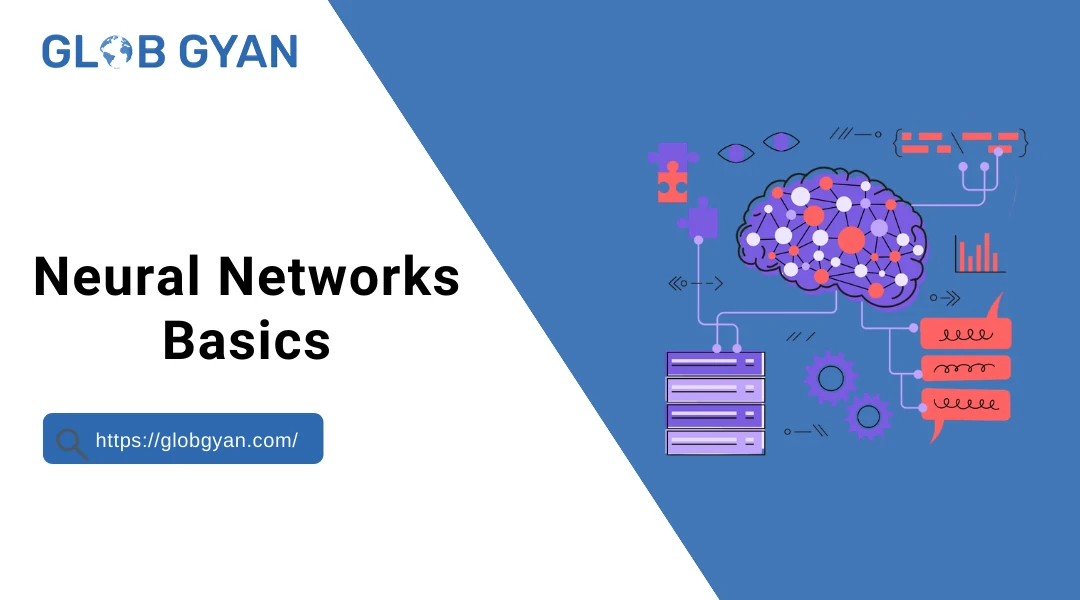
At the heart of AI deep learning is something called an artificial neural network. This system is inspired by how neurons in the human brain work.
An artificial neural network usually has:
- Input Layer – Takes in raw data like text, images, or numbers
- Hidden Layers – Multiple layers that process and analyze patterns
- Output Layer – Gives the final result or prediction
The reason it’s called deep learning is because there are many hidden layers. These layers help the system understand complex patterns step by step.
Deep Learning vs Machine Learning
One of the most searched topics is deep learning vs machine learning. Let’s simplify the difference.
| Machine Learning | Deep Learning |
| Uses manual feature extraction | Automatically learns features |
| Works with smaller datasets | Requires large datasets |
| Simpler models | Complex neural networks |
| Faster training | Slower but more accurate |
So, while machine learning algorithms rely on structured rules, deep learning can independently understand complex data like images, voice and videos.
Types of Deep Learning Models
There are different types of neural networks used in deep learning applications. Let’s look at the most important ones.
1. Convolutional Neural Networks (CNN)
Convolutional Neural Networks (CNN) are mainly used for image-related tasks.
They are great for:
- Face recognition
- Medical image analysis
- Self-driving car vision systems
CNNs detect patterns such as edges, shapes and objects inside images.
2. Recurrent Neural Networks (RNN)
Recurrent Neural Networks (RNN) are designed for sequence data.
They are used in:
- Language translation
- Chatbots
- Speech recognition
- Text prediction
RNNs remember previous information, making them ideal for time-based or sequence tasks.
Deep Learning Examples in Real Life
Here are some practical deep learning examples you use daily:
- Google Voice Search understanding your speech
- Netflix recommendations suggesting movies
- Email spam filters detecting unwanted messages
- Face unlock on smartphones
- Autonomous vehicles recognizing road signs
These are real-world deep learning applications that show how powerful this technology is.
Deep Learning Applications Across Industries
Deep learning in artificial intelligence is not limited to tech companies. It is used across many industries:
Healthcare
- Disease detection from X-rays
- Drug discovery
- Predictive diagnosis
Finance
- Fraud detection
- Risk analysis
- Automated trading
E-commerce
- Product recommendations
- Customer behavior analysis
Manufacturing
- Quality inspection
- Predictive maintenance
Deep learning supports Artificial Intelligence and Automation by making systems smarter and more efficient.
Deep Learning in Artificial Intelligence and Automation
The combination of artificial intelligence and automation is reshaping business processes.
Deep learning allows:
- Smart robotics
- Automated quality checks
- Predictive maintenance
- Intelligent customer support
This leads to higher productivity, lower costs and faster operations across industries.
Advantages of Deep Learning
Some major benefits include:
- High accuracy
- Automatic feature learning
- Ability to process unstructured data
- Strong performance in vision and speech tasks
This makes deep learning ideal for complex real-world problems.
Challenges of Deep Learning
Despite its power, deep learning also has some limitations:
- Requires huge data
- High computational cost
- Needs powerful hardware (GPUs)
- Difficult to interpret decisions
However, advancements in technology are gradually overcoming these challenges.
Future Scope of Deep Learning
The future of deep learning looks promising. From healthcare and education to robotics and finance, its impact will continue to grow.
With rapid progress in artificial intelligence and automation, deep learning will become the foundation of next-generation smart systems.
Conclusion
Now that you understand what is deep learning, its meaning, types and applications, it becomes clear why this technology is shaping the future.
Deep learning is more than just a trend. It is the backbone of modern artificial intelligence. From convolutional neural networks (CNN) to recurrent neural networks (RNN), and from simple recommendations to self-driving cars, deep learning continues to transform the world.
If you are learning about AI, understanding deep learning is not optional, it is essential.
FAQs
Deep learning is a part of artificial intelligence that allows computers to learn from large amounts of data using neural networks. It helps machines recognize images, understand speech and make smart decisions automatically.
Yes, deep learning is a subset of artificial intelligence (AI). It is a specialized branch of machine learning that uses multi-layered neural networks to solve complex problems like image recognition and language translation.
Machine learning requires manual feature selection and works well with structured data, while deep learning automatically learns patterns from large amounts of unstructured data like images, audio and text.
Deep learning models have multiple layers that learn complex patterns. To train these models accurately, they need a large volume of data so they can identify patterns and improve prediction accuracy.
Deep learning is used in voice assistants, face recognition, Netflix recommendations, fraud detection, self-driving cars, medical diagnosis, chatbots and language translation systems.