


Navratri is one of the most sacred Hindu festivals dedicated to the worship of Goddess Durga and her nine divine forms known as Navdurga. Each day of the festival is associated with a different goddess, and devotees observe prayers, fasting, and spiritual practices during these nine days.
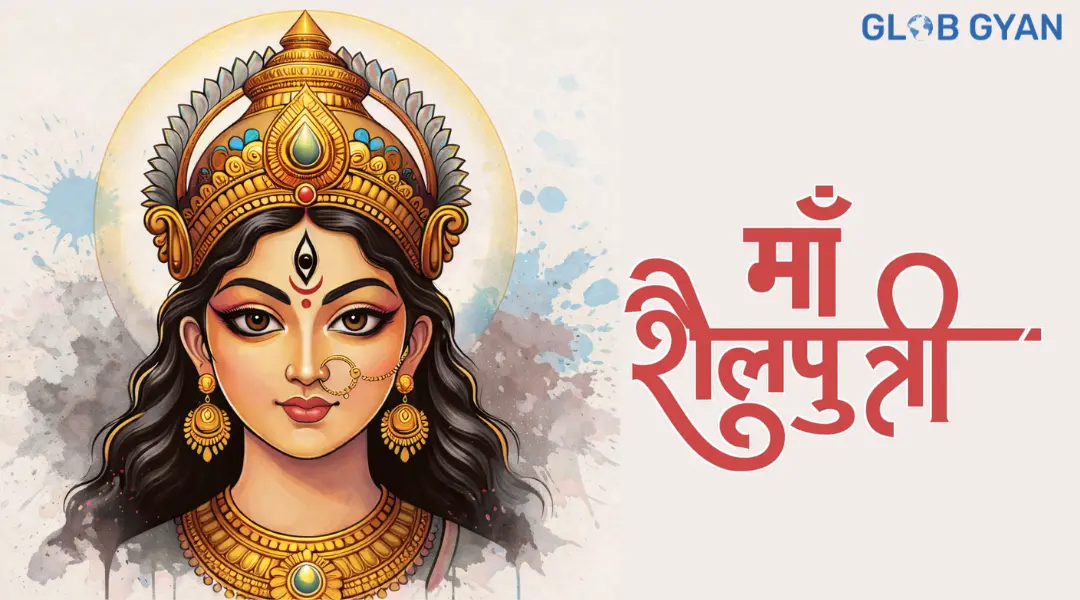
The 1st day of Navratri is dedicated to Maa Shailputri, the first form of Navdurga. The Day 1 Navratri goddess symbolizes purity, strength, and the beginning of the spiritual journey during Navratri. Devotees begin their fast, perform Navratri puja, and seek blessings for happiness, stability, and spiritual growth.
In this guide, you will learn about Maa Shailputri, the Shailputri Mata story, her mantra, puja rituals, bhog, colour of the day, and the spiritual importance of the first day of Navratri.
If you want to understand the full festival including all nine goddesses, rituals, and dates, you can also read our detailed guide on Chaitra Navratri 2026.
Who Is Maa Shailputri? (Navratri First Day Mata Name)
The Navratri first day mata name is Maa Shailputri, the first and most fundamental form of Goddess Durga worshipped during the first Navratra.
The name Shailputri comes from two Sanskrit words:
- Shail – meaning mountain
- Putri – meaning daughter
Therefore, Shailaputri Devi is known as the daughter of the Himalayas. In Hindu mythology, she was born to King Himalaya, the ruler of mountains.
Maa Shailputri represents strength, stability, and the power of nature. She symbolizes the grounding energy that forms the foundation of spiritual development.
In traditional depictions:
- She rides a white bull called Nandi
- She holds a trident (Trishul) in one hand
- She holds a lotus flower in the other
The trident represents divine power and protection, while the lotus symbolizes purity and spiritual awakening.
Because she rides a bull, she is also known as Vrisharudha Devi.
Devotees worship Navratri day 1 goddess Maa Shailputri to seek courage, stability, and positive energy at the beginning of the Navratri festival.
Maa Shailputri Story (Shailputri Mata Story)
The Maa Shailputri story is one of the most important legends in Hindu mythology and is closely connected with Goddess Sati and Lord Shiva.
According to ancient scriptures, Maa Shailputri was born in her previous life as Goddess Sati, the daughter of King Daksha Prajapati.
Sati was a devoted follower of Lord Shiva and eventually married him. However, her father King Daksha strongly opposed their marriage because he considered Shiva to be an unconventional ascetic.
One day, King Daksha organized a grand yajna (sacred ritual) and invited many gods and sages but deliberately did not invite Lord Shiva.
Despite not receiving an invitation, Goddess Sati decided to attend the ceremony because she wanted to visit her family. When she arrived, she saw that her father was openly insulting Lord Shiva.
Deeply hurt and unable to tolerate the humiliation of her husband, Goddess Sati sacrificed herself by jumping into the sacred fire of the yajna.
After this tragic event, Lord Shiva was filled with grief and anger.
In her next birth, the goddess was reborn as the daughter of King Himalaya and Queen Mena. Because she was born as the daughter of the mountain king, she became known as Mata Shailputri.
Later, she performed intense penance and eventually reunited with Lord Shiva through marriage again.
This Shailputri Mata story symbolizes devotion, sacrifice, determination, and the eternal power of divine love.
1st Day of Navratri 2026 Timing (Ghatasthapana Muhurat)
The first day of Navratri marks the beginning of the nine-day festival and is considered extremely auspicious.
One of the most important rituals performed on this day is Ghatasthapana (Kalash Sthapana).
Ghatasthapana represents the invocation of Goddess Durga into the home and symbolizes prosperity, purity, and divine presence.
First Day of Navratri Timing (Approx)
Pratipada Tithi Start – 19 March 2026 (Morning)
Pratipada Tithi End – 20 March 2026 (Morning)
Ghatasthapana Muhurat
Morning – 6:30 AM to 8:30 AM (Approx)
Devotees usually perform this ritual during the auspicious morning muhurat to begin the Navratri puja in the most sacred way.
Navratri Day 1 Puja Vidhi (Maa Shailputri Puja)
Performing Navratri puja on the first day of Navratri is considered very important because it marks the spiritual beginning of the festival.
Step-by-Step Puja Process
- Wake up early in the morning and take a bath.
- Clean and purify the puja area.
- Place a wooden platform and cover it with a red or yellow cloth.
- Perform Ghatasthapana (Kalash Sthapana).
- Install an idol or image of Mata Shailputri.
- Offer flowers, kumkum, turmeric, and rice.
- Light a diya and incense sticks.
- Offer Maa Shailputri ka bhog.
- Chant the first day of Navratri mantra and perform aarti.
Performing this Navratri puja with devotion is believed to bring peace, prosperity, and spiritual growth.
Mata Shailputri Mantra (First Day of Navratri Mantra)
On the day one of Navratri, devotees chant sacred mantras dedicated to Day 1 Navratri goddess Maa Shailputri.
Shailaputri Devi Mantra
ॐ देवी शैलपुत्र्यै नमः॥
Chanting this Mata Shailputri mantra 108 times helps remove negative energy and invites divine blessings.
Stuti Mantra
Vande Vanchitalabhaya Chandrardhakritashekharam
Vrisharudham Shooldharam Shailputrim Yashasvinim
This mantra praises the divine power and grace of Shailputri Mata.
Maa Shailputri Ka Bhog (Navratri Day 1 Bhog)
Every form of Navdurga is offered with a specific type of bhog.
Maa Shailputri ka bhog is simple and sattvic.
Traditional Bhog for Maa Shailputri
- Desi ghee
- Sugar
- Kheer
- White sweets
- Fresh fruits
Offering desi ghee to Maa Shailputri is believed to bring good health and protection from illness.
Shailputri Mata Colour and What to Wear on Navratri Day 1
Each day of Navratri is associated with a special color that represents the energy of the goddess.
The Shailputri Mata colour for the first day of Navratri is Yellow.
Yellow symbolizes:
- positivity
- happiness
- energy
- prosperity
Recommended Clothes for Navratri Day 1
- Yellow saree
- Yellow kurta
- Golden traditional outfits
- Cream or light orange dresses
Wearing yellow clothes while performing Navratri puja is believed to attract the blessings of Maa Shailputri.
What to Eat on the First Day of Navratri (Vrat Food)
Many devotees observe fasting on the first Navratra and eat only satvik vrat food.
Foods Allowed During Navratri Fast
- Fruits (apple, banana, papaya)
- Milk and dairy products
- Sabudana khichdi
- Kuttu flour roti
- Singhara flour dishes
- Boiled potatoes with rock salt
- Makhana
- Dry fruits
These foods provide energy and maintain purity during Navratri vrat.
Foods to Avoid
- Onion and garlic
- Non-vegetarian food
- Wheat flour
- Regular salt (use rock salt)
- Alcohol and processed foods
Navratri Day 1 Goddess and 12 Zodiac Signs
According to astrology, worshipping Navratri Day 1 goddess Maa Shailputri is believed to bring positive energy and balance for people of all 12 rashi (zodiac signs). As the first form of Navdurga, Maa Shailputri represents stability, strength, and new beginnings. Her blessings help devotees start the Navratri festival with positivity, confidence, and spiritual focus.
Her divine blessings are believed to bring:
- Financial stability
- Mental peace
- Career growth
- Spiritual awakening
Devotees believe that praying to Maa Shailputri on the first day of Navratri helps remove obstacles and strengthens inner stability. If you want to know how Navratri may influence your zodiac sign, you can read our detailed guide on 12 Rashi Navratri Horoscopes.
Spiritual Significance of Maa Shailputri
Maa Shailputri is associated with the Muladhara Chakra, also known as the root chakra in the human body. This chakra represents stability, grounding, and the basic life energy that supports both physical and spiritual balance.
For this reason, Maa Shailputri is worshipped on the first day of Navratri, symbolizing the beginning of the spiritual journey. By praying to her, devotees seek strength, stability, and positive energy to start the nine-day festival with devotion and faith.
Benefits of Worshipping Maa Shailputri
Worshipping Navratri day 1 goddess Maa Shailputri is believed to bring many benefits.
Benefits
- strengthens mental stability
- increases confidence and courage
- removes negative energy
- improves health and well-being
- supports spiritual development
Because of these benefits, the first day of Navratri holds great importance among devotees.
Conclusion
Maa Shailputri, the Navratri Day 1 goddess, marks the beginning of the sacred nine-day festival of Navratri and represents strength, purity, and spiritual awakening. As the first form of Navdurga and the daughter of King Himalaya, Mata Shailputri is worshipped on the first day of Navratri through Navratri puja, chanting the Mata Shailputri mantra, and offering Maa Shailputri ka bhog to seek blessings for peace, stability, and prosperity. The Maa Shailputri story also teaches the importance of devotion, sacrifice, and faith. By praying to Shailaputri Devi at the start of Navratri, devotees begin their spiritual journey with positive energy, hoping for strength, success, and spiritual growth in their lives.
FAQs
The first day of Navratri goddess is Maa Shailputri, the first form of Navdurga.
The Shailaputri Devi mantra is:
ॐ देवी शैलपुत्र्यै नमः॥
Maa Shailputri ka bhog includes desi ghee, kheer, fruits, sugar, and white sweets.
The Shailputri Mata colour for the first day of Navratri is yellow.
The Maa Shailputri story explains how Goddess Sati was reborn as the daughter of King Himalaya and later became known as Mata Shailputri.