


MBBS in India: Complete Step-by-Step Guide to Becoming a Doctor
Choosing MBBS is not just selecting a course — it’s choosing a lifelong responsibility. Every year, lakhs of Indian students dream of wearing the white coat. But confusion about eligibility, NEET, fees, private vs government colleges, and career scope stops many students from making clear decisions.
If you are a Class 10, 12, or PCMB student — or a parent planning your child’s future — this detailed guide will give you complete clarity.
In this article, you’ll learn:
- What MBBS really is
- Who is eligible (2026 updated rules)
- Step-by-step admission process
- Government vs Private fees comparison
- Top colleges in India
- Salary expectations in India
- Career growth roadmap
- Pros, cons & alternatives
Let’s begin.
What is MBBS?
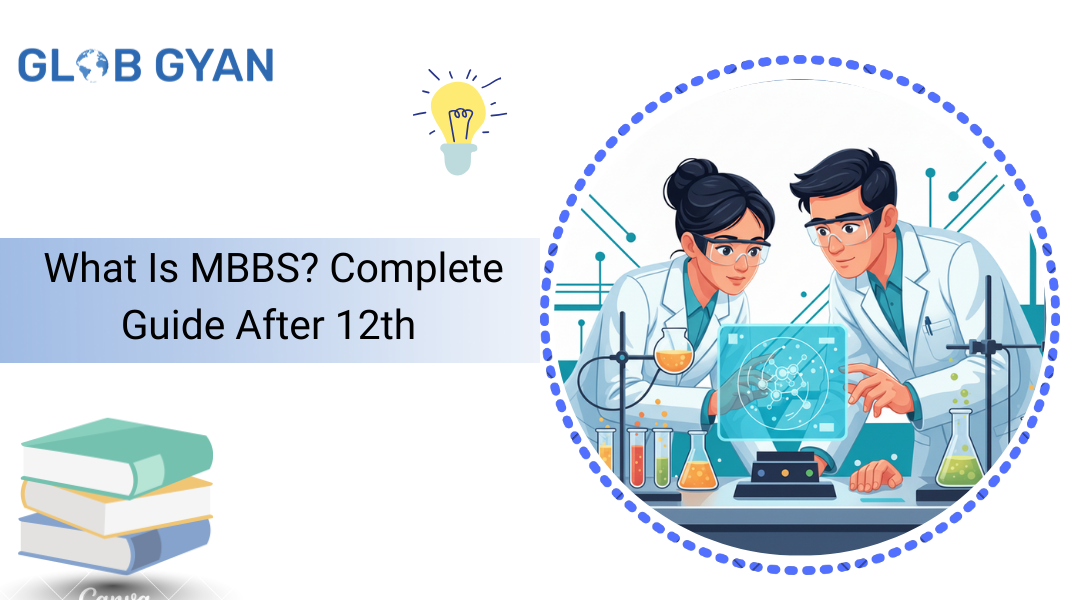
Full Form Of MBBS (Bachelor of Medicine and Bachelor of Surgery) is the undergraduate medical degree required to become a doctor in India.
In India, MBBS is regulated by the National Medical Commission (NMC).
After completing MBBS, a student becomes a registered medical practitioner and can:
- Work as a General Physician
- Join a hospital
- Open a clinic
- Prepare for PG (MD/MS)
- Work in government health services
MBBS is the foundation of all medical specializations.
MBBS Course Duration in India
- 4.5 years academic study
- 1 year compulsory internship
Total Duration: 5.5 years
During internship, students work in:
- Medicine
- Surgery
- Pediatrics
- Obstetrics & Gynecology
- Emergency care
- Community medicine
You receive a stipend during internship (₹12,000–₹30,000 per month depending on college).
Eligibility Criteria for MBBS ( Updated)
To apply for MBBS in India:
Educational Qualification
You must have:
- Passed Class 12 (PCB/PCMB)
- Subjects: Physics, Chemistry, Biology
- English compulsory
Minimum Marks
- General Category: 50% in PCB
- OBC/SC/ST: 40% in PCB
- PwD: 45%
Age Criteria
- Minimum age: 17 years (as of 31 December of admission year)
- No upper age limit (as per current guidelines)
Exams Required for MBBS
NEET-UG (Mandatory)
The only entrance exam for MBBS in India is:
NEET-UG
It is conducted by the National Testing Agency (NTA).
NEET Exam Pattern ( Expected)
- Mode: Offline (Pen & Paper)
- Subjects: Physics, Chemistry, Biology
- Total Questions: 200 (180 to be attempted)
- Total Marks: 720
- Duration: 3 hours 20 minutes
To get a government MBBS seat, students typically need:
- 600+ marks (General category)
- 500–550+ (reserved category depending on state)
MBBS Admission Process (Step-by-Step)
Step 1: Complete Class 12 with PCB
Focus on strong concepts in Biology.
Step 2: Register for NEET-UG
Apply online via official NTA website.
Step 3: Appear for NEET Exam
Score as high as possible.
Step 4: Check NEET Result & Rank
Your All India Rank (AIR) determines your college chances.
Step 5: Participate in Counseling
Counseling is conducted by:
- MCC (All India Quota 15%)
- State counseling authorities (85% state quota)
You will:
- Fill college preferences
- Lock choices
- Get seat allotment
- Report to allotted college
Step 6: Document Verification & Admission
Submit documents and pay fees.
MBBS Fee Structure in India (LATEST)
Here’s a realistic comparison:
| Type of College | Annual Fees | Total 5.5 Years Cost |
| Government College | ₹10,000 – ₹1,50,000 | ₹50,000 – ₹8 lakh |
| Semi-Government | ₹3 – ₹8 lakh | ₹20 – ₹40 lakh |
| Private College | ₹10 – ₹25 lakh | ₹60 lakh – ₹1.2 crore |
| Deemed Universities | ₹15 – ₹30 lakh | ₹80 lakh – ₹1.5 crore |
Government MBBS is extremely affordable compared to private colleges.
Top MBBS Colleges in India
Here are some of the most reputed medical colleges:
- All India Institute of Medical Sciences
- Christian Medical College
- Armed Forces Medical College
- Maulana Azad Medical College
- King George’s Medical University
Admission to these colleges requires a very high NEET rank.
Career Scope After MBBS
After completing MBBS, you can:
1. Work as a General Physician
Start earning immediately.
2. Government Jobs
- UPSC CMS
- State PSC
- Railway doctor
- ESIC hospitals
3. Postgraduate Studies
- MD (Doctor of Medicine)
- MS (Master of Surgery)
- DNB
Specializations include:
- Cardiology
- Neurology
- Pediatrics
- Orthopedics
- Dermatology
4. Hospital Administration
MBA in Hospital Management
5. Research & Academics
Join medical colleges as faculty after PG.
Salary After MBBS in India (THIS YEAR)
Fresher (After Internship)
₹4 – ₹8 lakh per annum
2–5 Years Experience
₹8 – ₹15 lakh per annum
After PG Specialization
₹15 – ₹30 lakh per annum
Senior Specialist / Private Practice
₹30 lakh – ₹1 crore+ annually
Metro cities offer higher salaries but cost of living is also high.
Pros and Cons of MBBS
Pros
- High respect in society
- Stable career
- Strong earning potential
- Global opportunities
- Job security
Cons
- Long study duration
- High competition
- Expensive private education
- Stressful work life
- Continuous learning required
Who Should Choose MBBS?
MBBS is suitable for students who:
- Have strong interest in Biology
- Can study consistently for long hours
- Handle pressure well
- Are emotionally strong
- Want to serve society
If you dislike blood, hospital environment, or long academic commitment, reconsider.
Alternative Career Options (If Not MBBS)
If NEET score is low or interest changes, consider:
- BDS (Dentistry)
- BAMS (Ayurveda)
- BHMS (Homeopathy)
- BPT (Physiotherapy)
- BSc Nursing
- BSc Biotechnology
- Pharmacy (B.Pharm)
- Allied Health Sciences
These fields also offer strong career growth.
Government vs Private MBBS: Quick Comparison
| Factor | Government College | Private College |
| Fees | Very Low | Very High |
| Competition | Extremely High | Moderate |
| Patient Exposure | Excellent | Good |
| ROI | Very High | Depends |
| Seat Availability | Limited | More |
If you can secure a government seat, it is financially wiser.
Important Documents Required for Admission
- NEET Admit Card
- NEET Scorecard
- Class 10 & 12 Marksheet
- Transfer Certificate
- Caste Certificate (if applicable)
- Aadhaar Card
- Passport-size photographs
Frequently Asked Questions (FAQ)
Is NEET compulsory for MBBS?
Yes. NEET-UG is mandatory for MBBS admission in India.
What is the total duration of MBBS?
5.5 years including 1 year internship.
How many marks are required in NEET for government MBBS?
Usually 600+ for General category (varies by state).
Can I do MBBS without Biology?
No. Biology in Class 12 is compulsory.
Is MBBS difficult?
It requires dedication and consistent effort but is manageable with discipline.
What is the minimum age for MBBS?
17 years as of 31 December of admission year.
Final Career Advice
MBBS is not just a degree — it is a commitment to humanity. The journey is long, competitive, and demanding. But the rewards — respect, stability, financial growth, and the ability to save lives — are unmatched.
If you truly feel passionate about medicine, start preparing early, stay disciplined, and aim for a government college to reduce financial burden.
Success in MBBS is not about intelligence alone — it is about consistency, resilience, and purpose.
If becoming a doctor is your dream, begin today.
Plan smart. Study focused. Stay patient.