



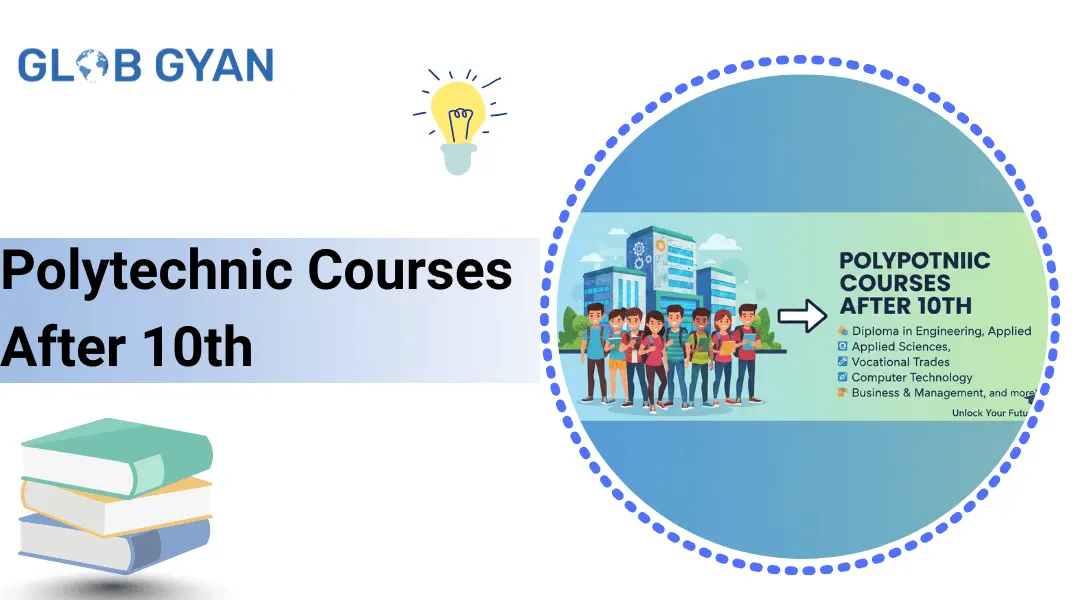
Choosing a career after 10th can feel confusing. One moment you’re thinking about Science, Commerce, Arts… and the next moment someone says, “Why don’t you do polytechnic?” Suddenly, you’re like What exactly is polytechnic and is it good for my future?
Don’t worry. You’re not alone. Thousands of students every year search for polytechnic courses after 10th because they want practical skills, faster job options and a clear career path.
This complete guide by Glob Gyan will help you understand everything about diploma courses after 10th, from eligibility and admission to fees, best branches, jobs and future scope all in simple language.
Let’s break it down step by step.
What is a Polytechnic Course?
A polytechnic course is a type of technical diploma after 10th that focuses more on practical skills and industry-based training rather than just theory.
In simple words:
Polytechnic = Learning by doing, not just reading.
These are usually 3 year diploma after 10th programs that prepare students for technical and engineering-related jobs.
How is Polytechnic Different from Degree Courses?
| Polytechnic Diploma | Engineering Degree |
| More practical | More theoretical |
| 3 years | 4 years |
| Job-oriented | Research + theory oriented |
| Lower fees | Higher fees |
If you like hands-on work, machines, computers, design, or technical problem-solving, a polytechnic diploma after 10th can be a smart choice.
Eligibility for Polytechnic Courses After 10th
Most polytechnic eligibility after 10th rules are simple:
- You must pass Class 10th
- Maths and Science are usually required
- Minimum marks depend on state & college
- Some courses allow polytechnic without maths (limited options)
Can You Do Polytechnic Without Maths?
Yes, for some non-engineering diploma courses like:
- Fashion Design
- Interior Design
- Hotel Management
- Animation & Multimedia
But for engineering branches, Maths is usually compulsory.
Polytechnic Admission Process After 10th
Admission rules depend on your state and college, but generally:
1. Entrance Exam
Many states conduct a polytechnic entrance exam after 10th.
2. Merit-Based Admission
Some private colleges give admission based on 10th marks.
3. Documents Required
- 10th Marksheet
- Aadhar Card
- Passport-size photos
- Caste certificate (if applicable)
- Domicile certificate (for govt colleges)
Polytechnic admission after 10th is usually competitive in government colleges and easier in private ones.
Best Polytechnic Courses After 10th (Branch-wise)
Let’s talk about the most popular and best polytechnic courses after 10th.
Engineering & Technical Diploma Courses
These are the most in-demand:
- Diploma in Mechanical Engineering
- Diploma in Civil Engineering
- Diploma in Electrical Engineering
- Diploma in Computer Engineering
- Diploma in Electronics & Communication Engineering
- Diploma in Automobile Engineering
These are part of the core polytechnic course list after 10th and offer strong job opportunities.
Non-Engineering Polytechnic Courses
Not everyone wants hardcore engineering. Good news — you have options:
- Diploma in Architecture Assistantship
- Diploma in Interior Design
- Diploma in Fashion Design
- Diploma in Pharmacy (D.Pharm)
- Diploma in Hotel Management
- Diploma in Animation & Multimedia
These are great skill-based courses after 10th and come under vocational diploma courses.
Polytechnic Courses for Different Streams
Polytechnic Courses for Science Students
If you studied Science with Maths, you’re lucky you have the maximum choices:
- Mechanical Engineering
- Civil Engineering
- Electrical Engineering
- Computer Engineering
- Electronics & Communication
These polytechnic courses for science students are highly job-oriented.
Polytechnic Courses for Commerce Students
Commerce students can also do polytechnic (in selected areas):
- Interior Design
- Fashion Design
- Hotel Management
- Animation & Multimedia
- Architecture Assistantship
These polytechnic courses for commerce students focus more on creativity and service industries.
Polytechnic Fees & Duration
Course Duration
- Usually 3 years
- Some courses may be 2 years
Polytechnic Fees After 10th
Fees depend on college type:
| College Type | Approx Fees (Per Year) |
| Government Polytechnic | ₹5,000 – ₹25,000 |
| Private Polytechnic | ₹30,000 – ₹1,00,000+ |
So yes, government polytechnic colleges are much more affordable.
Government vs Private Polytechnic Colleges
Government Polytechnic Colleges
Pros:
- Low fees
- Better recognition
- Good placements
- High competition
Cons:
- Limited seats
- Tough entrance exams
Private Polytechnic Colleges
Pros:
- Easier admission
- More branches
- Flexible criteria
Cons:
- Higher fees
- Quality varies
Both government polytechnic colleges and private polytechnic colleges have their place. Choose wisely based on budget and reputation.
ITI vs Polytechnic – Which is Better?
This is a classic question: ITI vs Polytechnic
ITI
- Short-term courses (6 months – 2 years)
- Very skill-focused
- Faster entry into basic jobs
Polytechnic
- 3-year diploma
- Higher technical level
- Better salary growth
- Option for B.Tech later
If you want long-term growth, polytechnic is usually better.
Career Options & Jobs After Polytechnic Diploma
After completing your diploma, many doors open.
Private Sector Jobs
- Junior Engineer
- Technician
- Supervisor
- CAD Designer
- Computer Technician
- Site Engineer
Government Jobs After Diploma
- JE (Junior Engineer)
- PSU jobs
- Railways
- State govt departments
Higher Studies
- B.Tech lateral entry (Direct 2nd year admission)
- Advanced diploma courses
So yes, polytechnic jobs after diploma can be both private and government-based.
Salary After Polytechnic
Let’s be honest, money matters.
Freshers usually earn:
- ₹12,000 – ₹25,000 per month (entry level)
- With experience: ₹30,000 – ₹60,000+
- Government jobs offer stable income + benefits
Salary depends on branch, location, skills and company.
Advantages of Choosing Polytechnic After 10th
Why do students choose polytechnic?
- Early career start
- Practical learning
- Lower education cost
- Industry-relevant skills
- Option to study further (B.Tech)
In short, it’s a smart mix of education + employability.
How to Choose the Best Polytechnic Course After 10th
If you’re wondering which polytechnic course is best after 10th, ask yourself:
- What subjects do I enjoy?
- Do I like machines, computers, design, or people-oriented work?
- What is my budget?
- Do I want to do B.Tech later?
- What jobs are in demand?
Your interest + market demand = best decision.
Internal Learning & Career Resources
To help you plan better, you can also explore on Glob Gyan:
- Courses after 10th
- Diploma courses after 10th
- Best career options after 10th
- Vocational courses after 10th
- ITI courses after 10th
- Engineering courses after 12th
- Government jobs after diploma
- After 12th courses
These guides help you compare and choose the right path.
Conclusion
Choosing polytechnic courses after 10th is a smart option for students who want practical skills, early job opportunities and a flexible future. Whether you aim for a private job, government sector, or higher studies like B.Tech, a polytechnic diploma after 10th can be a strong foundation.
The key is to choose the right branch, right college and right mindset.
And remember your career is a marathon, not a 100-meter race. Choose wisely, stay curious and keep upgrading your skills.
For more career guidance, detailed course comparisons and student-friendly resources, keep learning with Glob Gyan.
FAQs
Q1. Which polytechnic course is best after 10th?
Mechanical, Civil, Computer and Electrical are among the best.
Q2. Can I do polytechnic without maths?
Yes, for selected non-engineering courses.
Q3. Is polytechnic better than ITI?
For long-term growth, yes.
Q4. Can I do B.Tech after polytechnic?
Yes, through lateral entry.
Q5. What is the salary after polytechnic?
₹12,000–₹60,000+ depending on skills and experience.
Q6. Is polytechnic good for government jobs?
Yes, many JE and PSU roles accept diploma holders.