




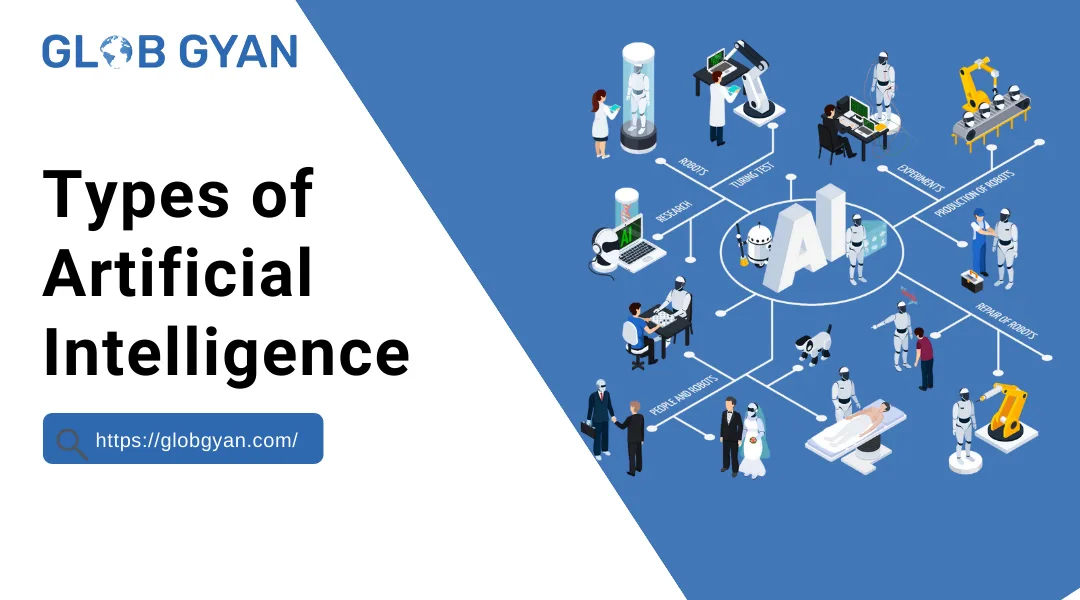
Artificial Intelligence is often described as one big technology, but in reality, it is a collection of different systems built for very different purposes. Some AI tools are designed to answer simple questions. Others analyze huge amounts of data. A few are still theoretical ideas that exist more in research papers than in real products.
That is why understanding the Types of Artificial Intelligence matters. Once you see how AI is actually divided and classified, it becomes much easier to understand what today’s systems can do and where their limits are.
Why AI Is Divided Into Different Types
AI is not classified just for academic reasons. The idea of artificial intelligence classification exists because not all AI behaves the same way. Some systems are very narrow and task-focused, while others are still concepts being explored for the future.
When people talk about automation, smart software or intelligent systems, they are usually referring to only one or two types of AI, even if they do not realize it.
Artificial Intelligence Classification Without the Technical Noise
If you strip away the academic language, artificial intelligence classification is simply a way to explain how limited or flexible an AI system is.
There are two common ways people talk about this:
• how capable the system is
• how it behaves when data changes
Both matter when you’re talking about artificial intelligence and automation in real work.
Artificial Intelligence Classification: Understanding the Core Structure
Experts use artificial intelligence classification to explain how AI systems differ in capability and behavior. This classification helps businesses choose the right tool and avoid unrealistic expectations.
There are two widely accepted ways to classify AI:
- Based on capability
- Based on functionality
Both classifications are relevant when discussing artificial intelligence and automation.
Types of Artificial Intelligence Based on Capabilities
When people refer to the 3 types of AI, they are usually talking about capability based classification.
Artificial Narrow Intelligence
Artificial narrow intelligence is the most common form of AI that companies use in automation today. Developers design it to perform a single task or a limited set of tasks very efficiently.
Examples include:
- Automated chat systems that handle customer queries
- Recommendation engines in e-commerce
- AI-powered quality checks in manufacturing
- Fraud detection systems in banking
These systems do not think independently. They rely on data patterns and predefined objectives. Still, artificial narrow intelligence is powerful because it delivers consistent results at scale.
Artificial General Intelligence
Artificial General Intelligence describes a level of AI where machines can learn and reason across multiple tasks, similar to humans. In theory, AGI could manage complex automation processes without constant reprogramming.
At present, this type of AI does not exist. Most automation systems do not require general intelligence, which is why AGI remains a research goal rather than a practical tool.
Artificial Super Intelligence
Artificial Super Intelligence refers to AI that surpasses human intelligence in all areas. This concept often appears in discussions about the long-term future of artificial intelligence and automation.
For now, ASI remains theoretical and is not part of real world automation strategies.
These 3 categories together form the widely known 3 types of AI.
Types of Artificial Intelligence Based on Functionality
Another important artificial intelligence classification looks at how AI systems behave and interact with data.
Reactive Machines
Reactive machines respond only to current inputs. They do not store memory or improve over time. These systems are simple but reliable in controlled environments.
Limited Memory AI
Limited memory AI systems can learn from historical data. Most automated systems used today fall into this category.
Examples include:
- Predictive maintenance systems
- Automated supply chain planning
- Self-optimizing logistics platforms
This functional model supports many real-world automation use cases.
Theory of Mind AI
Theory of Mind AI refers to systems that could understand emotions, intentions, and social signals. This type of AI is still under development and has limited practical application in automation today.
Self-Aware AI
Self-aware AI would have consciousness and awareness of its own existence. This concept remains speculative and does not play a role in current automation technology.
Why Most Automation Depends on Artificial Narrow Intelligence
Despite the excitement around advanced AI, most automation works best with narrowly focused systems. Artificial narrow intelligence offers:
- Predictable behavior
- Easier monitoring
- Lower implementation risk
This is why businesses continue to invest in narrow AI rather than waiting for more advanced intelligence models.
The Future of Artificial Intelligence and Automation
As data availability increases and models improve, automation will become more adaptive and responsive. However, progress will likely continue within the boundaries of artificial narrow intelligence for the foreseeable future.
The future of artificial intelligence and automation is not about machines replacing humans, but about systems working alongside people to improve productivity and consistency.
Common Confusion Around AI Types
One common misunderstanding is that AI systems think or understand situations the way humans do. In reality, most AI systems simply recognize patterns and act on probabilities.
Another misconception is that automation requires advanced intelligence. In most cases, simple and focused AI produces better results than complex systems.
Knowing the types of AI helps separate realistic use cases from exaggerated claims.
Final Thoughts
The conversation around AI often focuses on the future, but most value today comes from practical systems that already exist. By understanding the Types of Artificial Intelligence, how artificial intelligence classification works and why artificial narrow intelligence is so widely used, the topic becomes much clearer.
FAQs
Artificial Intelligence is commonly classified in two ways: based on capability and based on functionality. Capability based classification includes Artificial Narrow Intelligence, Artificial General Intelligence and Artificial Super Intelligence. Functionality based classification includes reactive machines, limited memory AI, theory of mind AI and self aware AI.
Developers design Artificial Narrow Intelligence (ANI) to perform a specific task or a limited set of tasks. Most AI systems used today such as chatbots, recommendation systems and fraud detection tools fall under this category.
No, Artificial General Intelligence does not exist in practical applications yet. It is still a research concept where machines would be able to think, learn and reason across multiple tasks like humans.
Artificial Super Intelligence refers to a theoretical form of AI that would exceed human intelligence in all areas. Real-world systems do not currently use it and it remains a future possibility.
Experts divide AI into different types to explain how capable or flexible an AI system is. This classification helps businesses and users understand what an AI system can realistically do and where its limitations lie.
AI capability refers to how intelligent an AI system can become, while AI functionality focuses on how the system behaves, learns and reacts to data over time.
Companies most commonly use Artificial Narrow Intelligence in automation because they find it reliable, predictable and easier to monitor compared to more advanced theoretical AI models.
Limited memory AI can learn from past data and improve its performance over time. Most modern AI applications, such as predictive analytics and recommendation engines, use this type of AI.
Most current AI systems do not understand emotions or intentions the way humans do. Theory of mind AI aims to achieve this, but it is still under development.
No, most automation systems work effectively using narrow, task-focused AI. Advanced AI is not necessary for achieving efficient and scalable automation in most business cases.