





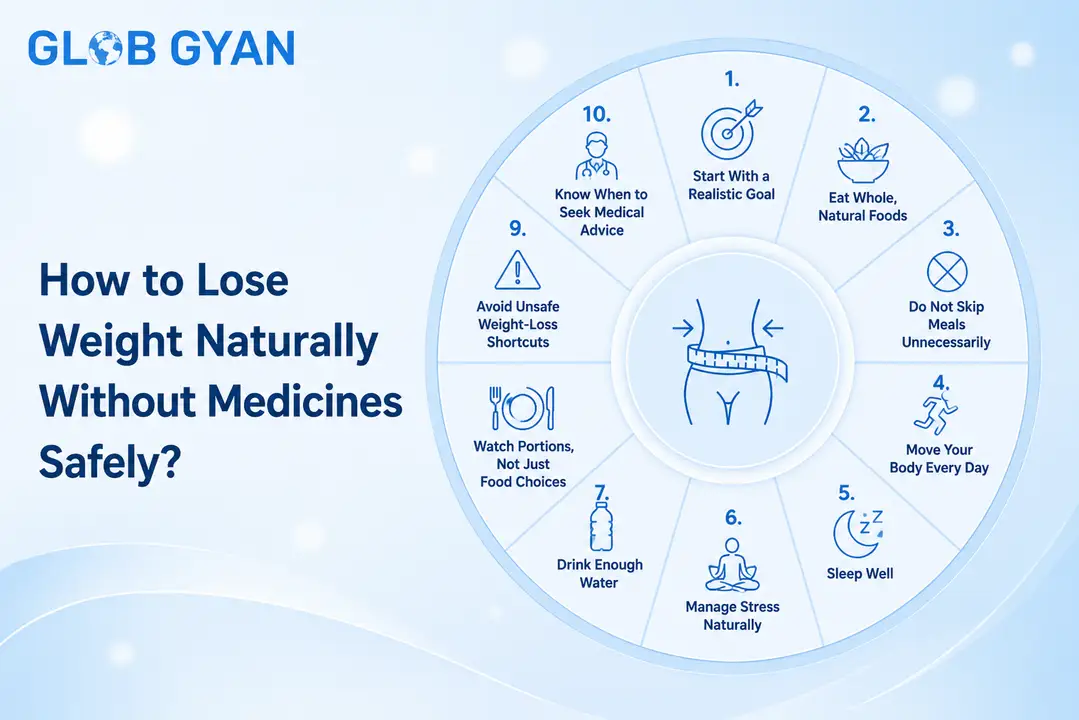
Losing weight naturally does not mean starving yourself, following extreme diets, or taking unverified pills. The safest approach is to build daily habits that support fat loss, better digestion, stronger metabolism, and long-term health.
Health authorities recommend gradual weight loss rather than quick results. The CDC notes that losing about 1 to 2 pounds per week is more sustainable for many people than rapid weight loss.
1. Start With a Realistic Goal
Many people fail because they expect fast results. Instead of trying to lose a large amount of weight in a few weeks, set small goals such as:
- Losing 2–4 kg over a few months
- Walking 30 minutes daily
- Reducing sugary drinks
- Eating more home-cooked meals Slow progress is still progress.
2. Eat Whole, Natural Foods
A natural weight-loss plan should focus on simple, nutritious foods:
- Vegetables and fruits
- Whole grains
- Lentils, beans, eggs, fish, tofu, or lean meat
- Nuts and seeds in small portions
- Curd, yogurt, or other protein-rich foods
- Plenty of water
Try to reduce packaged snacks, fried foods, sugary drinks, sweets, and refined flour products. The NHS also recommends eating plenty of fruit and vegetables, drinking water, and choosing regular balanced meals instead of relying on crash dieting.
3. Do Not Skip Meals Unnecessarily
Skipping meals may seem like an easy way to cut calories, but it can lead to overeating later. A better approach is to eat balanced meals with enough protein, fiber, and healthy fats. These nutrients keep you full for longer and help reduce cravings.
4. Move Your Body Every Day
Exercise is important, but it does not have to be complicated. Brisk walking, cycling, dancing, swimming, yoga, and strength training can all help.
The WHO recommends adults do at least 150 minutes of moderate-intensityphysical activity per week, and muscle-strengthening activities on 2 or more days per week.
A simple weekly plan could be:
- 30 minutes brisk walking, 5 days a week
- 2 days of basic strength training
- Light stretching or yoga for flexibility
5. Sleep Well
Poor sleep can increase hunger, cravings, and stress eating. Aim for 7–9 hours of quality sleep when possible. Avoid heavy meals, caffeine, and screen time close to bedtime.
6. Manage Stress Naturally
Stress can affect eating habits and weight. Many people eat more when they feel anxious, tired, or emotionally overwhelmed.
Helpful stress-control habits include:
- Deep breathing
- Meditation
- Walking outdoors
- Journaling
- Talking to someone you trust
- Taking short breaks from screens
7. Drink Enough Water
Sometimes thirst feels like hunger. Drinking water before meals may help control portion sizes. Replace sugary drinks, packaged juices, and excessive tea or coffee with water, lemon water, coconut water, or unsweetened herbal drinks.
8. Watch Portions, Not Just Food Choices
Even healthy foods can cause weight gain if eaten in large amounts. Use smaller plates, eat slowly, and stop when you feel satisfied rather than overly full.
9. Avoid Unsafe Weight-Loss Shortcuts
Avoid unprescribed medicines, “fat burner” pills, detox teas, extreme fasting, and very low-calorie diets unless supervised by a qualified medical professional. These can cause weakness, nutrient deficiency, digestive problems, and weight regain.
10. Know When to Seek Medical Advice
Speak with a doctor or registered dietitian before starting a weight-loss plan if you are pregnant, breastfeeding, diabetic, taking regular medicines, have thyroid issues, heart disease, kidney disease, an eating disorder history, or sudden unexplained weight loss.
Safer Alternatives: Can I Use Supplements To Lose Weight?
Weight-loss supplements may seem helpful, but they should never replace a balanced diet, regular movement, good sleep, and healthy lifestyle habits. Some products may also cause side effects or interact with medications, so it’s important to choose carefully.
A safer approach is to focus on gradual, sustainable weight management through whole foods, protein, fiber, hydration, and consistent exercise. Supplements can be considered only as support, not as a shortcut.
For those looking for a responsible option, ZeroHarm supplements are designed to support your wellness journey alongside healthy habits.
Why Choose Fat Burner Supplements?
ZeroHarm Fat Burner supplement is designed as a high-potency weight-management supplement that supports fat metabolism, appetite control, energy, and digest ion when paired with a balanced diet and regular exercise.
Its formula includes plant-based ingredients such as Garcinia Cambogia, Green Coffee Bean Extract, Green Tea Extract, and Apple Cider Vinegar, which are commonly used to support cravings, metabolism, and fat-burning goals.
ZeroHarm’s advanced nano-formulation technology, positioned to offer 10X higher absorption compared with regular tablets and improved bioavailability for more efficient delivery of active ingredients.
To add on, clean, herb-based ingredients with no artificial fillers, along with in-house manufacturing, third-party testing, and scientific validation.
Conclusion
Natural weight loss is not about punishment. It is about building a healthier lifestyle step by step. Eat real food, stay active, sleep well, manage stress, and be patient. Safe weight loss takes time, but the results are more likely to last.
Frequently Asked Questions
Can I lose weight naturally without taking medicines?
Yes, you can lose weight naturally by eating balanced meals, staying active, sleeping well, and managing stress. The key is consistency and making healthy changes you can maintain.
How much weight can I safely lose in a week?
A safe target for many people is around 0.5 to 1 kg per week. Losing weight too quickly may cause weakness, nutrient deficiency, and weight gain.
Which foods help with natural weight loss?
Vegetables, fruits, whole grains, lentils, beans, eggs, fish, tofu, nuts, seeds, and yogurt can support weight loss. These foods provide protein, fiber, and nutrients that keep you full.
Is exercise necessary for losing weight?
Exercise is not the only factor, but it helps burn calories, improve metabolism, and maintain muscle. Walking, cycling, yoga, swimming, and strength training are good natural options.
Does sleep affect weight loss?
Poor sleep can increase hunger, cravings, and stress, which may lead to overeating. Getting 7–9 hours of good sleep can support healthy weight management.
Are home remedies effective for weight loss?
Some habits like drinking water, eating fiber-rich foods, and staying active can help, but there is no magic home remedy. Sustainable weight loss comes from overall lifestyle changes.
What should I avoid when trying to lose weight naturally?
Avoid sugary drinks, fried foods, processed snacks, overeating, late-night bingeing, and extreme diets. Also avoid weight-loss medicines or supplements unless advised by a doctor.
Disclaimer
This information is provided for general guidance only and should not be considered professional, legal, medical, or financial advice. Please consult a qualified expert before making decisions based on this content or relying on it.