




Imagine waking up to an alarm that automatically opens your curtains, starts your coffee machine, adjusts the room temperature, and sends your fitness data to your smartphone before you’ve even left your bed. Just a decade ago, this would have sounded like science fiction. Today, it’s an everyday reality made possible by the Internet of Things (IoT).
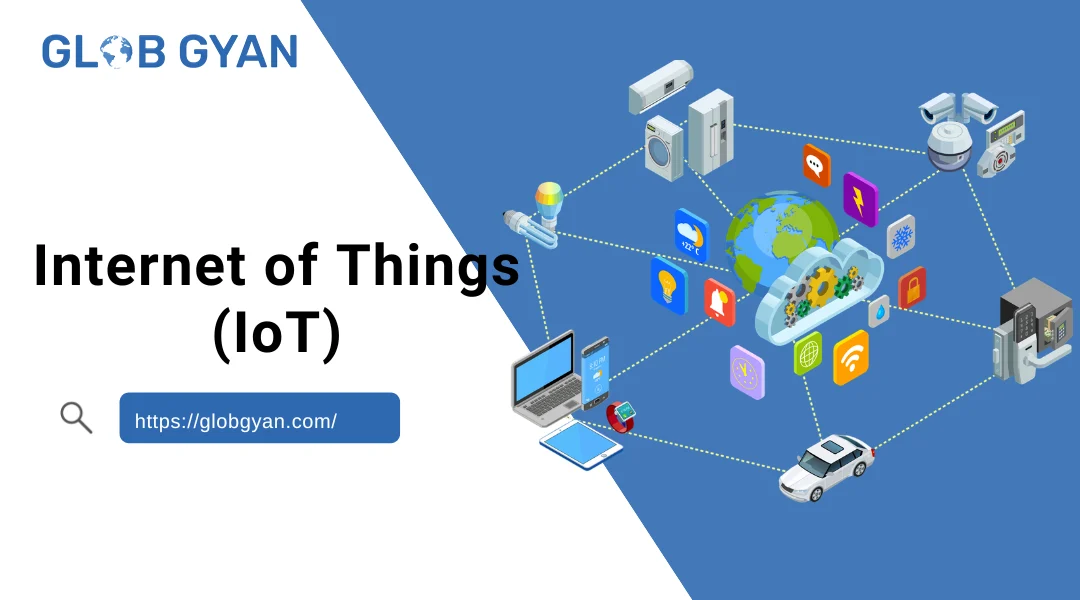
The Internet of Things is transforming the way we interact with technology by enabling physical objects to communicate over the internet. Instead of operating as standalone devices, modern products can collect information through sensors, exchange data with other systems, and perform actions automatically. From smart homes and wearable fitness trackers to connected factories and intelligent transportation systems, IoT is reshaping industries and improving everyday life.
Businesses are also embracing IoT to improve efficiency, reduce operational costs, monitor assets in real time, and deliver better customer experiences. Manufacturers use connected machines to predict equipment failures before they happen, hospitals monitor patients remotely using wearable devices, and farmers rely on smart sensors to optimize irrigation and crop health.
As technologies such as cloud computing, artificial intelligence (AI), machine learning, and 5G continue to advance, the possibilities for IoT are expanding rapidly. Analysts estimate that tens of billions of internet-connected devices will be in use over the coming years, generating enormous amounts of data that can be turned into valuable business insights.
What Is the Internet of Things?
The Internet of Things IoT, for short, is the network of physical objects that have sensors, software, and connectivity built into them, allowing them to collect and exchange data automatically.
That’s the textbook version. Here’s the version you’ll actually remember: IoT is what happens when everyday objects get a voice.
A traditional light switch is dumb it does exactly what you physically tell it to do. A smart light bulb, on the other hand, knows what time it is, can sense whether anyone’s in the room, responds to your voice, learns your preferences over time, and reports its energy usage to an app. Same job. Completely different relationship between the object and the world around it.
One thing people often get wrong: IoT devices don’t need to be connected to the public internet. They need to be on a network; it could be a local Wi-Fi, a private cellular connection, or a mesh of low-power radio signals and they need a unique address so other systems can find and communicate with them. The “internet” in Internet of Things is more of a metaphor for interconnectedness than a technical requirement.
The term itself was coined in 1999 by Kevin Ashton, a British technologist at Procter & Gamble, who was trying to convince his bosses that RFID tags on products could transform the supply chain. He needed a catchy name for the concept. He picked “Internet of Things.” It stuck.
A quick “is this IoT?” checklist:
- Does it have a sensor that collects data? ✓
- Is it connected to a network? ✓
- Does it exchange data automatically? ✓
- Does it trigger some kind of response or action? ✓
If all four boxes are checked, it’s IoT.
How Does IoT Actually Work?
Most people think of IoT as just “devices connected to Wi-Fi.” The reality is more interesting — and understanding it helps you make smarter decisions about which devices to buy, build, or trust.
IoT systems work in four layers:
Layer 1 — Perception (the devices themselves) This is where the physical world meets the digital one. Sensors measure temperature, motion, humidity, pressure, light, vibration, GPS location, and dozens of other variables. Actuators do the opposite — they receive a command and make something happen in the physical world, like opening a valve or switching a motor. The device at this layer is usually small, low-power, and has limited computing ability of its own.
Layer 2 — Network (the communication) Data from the sensor needs to get somewhere useful. How it travels depends on what the application needs. Wi-Fi is fast but power-hungry — fine for a smart TV, impractical for a sensor buried in a field running on a tiny battery. Zigbee and Bluetooth Low Energy are designed for short-range, low-power communication. LoRaWAN can send a signal 15 km on a single battery charge, which is why it’s used for agricultural sensors and flood monitoring networks. 5G is transforming industrial IoT by enabling real-time communication for hundreds of thousands of devices per square kilometer.
Layer 3 — Processing (where data becomes insight) Once data arrives, something has to make sense of it. This happens either in the cloud (powerful, but adds latency and requires a reliable connection) or at the “edge” — meaning a small local computer physically close to the device. Edge computing is why a self-driving car can react to a child running into the road in milliseconds. It can’t wait for a signal to travel to a data center in Mumbai and come back. The computation has to happen on the spot.
Layer 4 — Application (what the user actually sees) This is your app, your dashboard, your alert notification, your automated response. The smart thermostat app that shows you last month’s energy usage. The factory floor dashboard that flags when a machine is running 3°C hotter than usual. The alert that tells a farmer his soil is too dry before the crops start showing stress.
IoT in the Real World: 8 Applications Across Industries
It’s easy to default to “smart home” when thinking about IoT. But consumer devices represent only a fraction of what’s deployed globally. Here are eight areas where IoT is already doing meaningful work.
1. Smart Home
Smart thermostats like the Nest or Ecobee learn your schedule and adjust heating and cooling automatically. According to Nest’s own data, users save an average of 10–12% on heating bills and 15% on cooling. Smart door locks let you grant temporary access codes to a plumber without being home. Motion-sensing lights turn themselves off when rooms are empty. These aren’t novelties over time, they genuinely change how much energy a household consumes.
2. Healthcare
Continuous glucose monitors (CGMs) like the Dexterity G7 track blood sugar every few minutes and send alerts to both patient and doctor when levels drift into dangerous territory with no finger-prick required. Hospital IoT systems track the location of every IV pump, wheelchair, and defibrillator in real time, which sounds trivial until a nurse is running through a ward looking for emergency equipment. Wearables that monitor heart rhythms have caught atrial fibrillation in people who had no symptoms.
3. Agriculture — especially in India and Southeast Asia
This is where IoT’s impact is often underestimated in Western tech coverage. In Maharashtra and Karnataka, startups like Fasal and CropIn deploy soil moisture sensors, micro-weather stations, and crop disease detection cameras that feed into an AI model, then send simple voice alerts in Marathi or Kannada to farmers who may not own a smartphone but do have a basic phone. In Bangladesh, a network of river-level sensors tied to SMS alert systems has dramatically improved flood evacuation lead times in communities where internet connectivity is limited but mobile networks reach.
4. Industrial Manufacturing (IIoT)
Siemens runs a factory in Amberg, Germany, where 75% of the production process is automated and monitored by IoT sensors. The factory produces programmable controllers and one of them, effectively, manages its own production line. Predictive maintenance is the big win here: rather than replacing parts on a fixed schedule (wasteful) or waiting for something to break (expensive), vibration sensors and temperature monitors give maintenance teams a two-week warning. Bosch claims predictive maintenance reduced unplanned downtime by 25% across several of its plants.
5. Logistics and Supply Chain
Asset tracking — vehicles, shipping containers, pallets, cold-chain cargo is actually the largest single application of IoT globally, accounting for about 22% of the total market. If you’ve ever watched a food delivery app show you exactly where your order is, that’s a simplified version of what logistics companies do with billions of dollars of cargo. Cold-chain monitoring is especially critical for pharmaceuticals: a sensor on a vaccine shipment can log temperature every five minutes from factory to clinic, providing an unbroken record that the product stayed within safe limits the entire journey.
6. Smart Cities
Barcelona reduced its water consumption by 25% using soil moisture sensors in its parks and gardens to irrigate only when needed. Singapore’s National Environment Agency uses IoT-enabled waste bins that send a signal when they’re 80% full, so collection trucks only make trips that are necessary to reduce fuel consumption and traffic. Amsterdam monitors canal water quality with floating sensors. These aren’t pilot projects; they’re running infrastructure.
7. Retail
Amazon Go stores use a combination of overhead cameras, weight sensors on shelves, and computer vision to let customers walk in, grab what they want, and walk out the payment processes automatically. Smart shelves from companies like Pricer monitor inventory in real time and flag when a product is running low before it runs out entirely. This sounds convenient, but it also represents a massive behavioral data collection operation something worth being aware of as a consumer.
8. Accessibility — the angle most IoT articles skip
Smart glasses like OrCam MyEye read text aloud for people with visual impairments, identify faces, and describe scenes. Fall-detection systems monitor elderly people living alone and automatically call emergency services if a fall is detected and the person doesn’t respond within 30 seconds. Voice-activated smart home systems give people with limited mobility control over their environment lights, locks, temperature, TV that was simply impossible 15 years ago. For this group of users, IoT isn’t a convenience. It’s genuine independence.
The Real Security Risks of IoT — With Actual Breach Examples
Every article about IoT mentions “security concerns.” Most of them leave it there, as if vague awareness is enough. It isn’t. Here’s what IoT security failures actually look like in the real world.
The Mirai Botnet (October 2016)
On October 21, 2016, large parts of the internet went dark. Twitter, Netflix, Spotify, Reddit, CNN — all went offline for hours. The culprit wasn’t a sophisticated state-sponsored attack. It was a network of roughly 600,000 hijacked baby monitors, home routers, and security cameras, all infected with a piece of malware called Mirai. These devices had been left with their factory-default usernames and passwords “admin/admin” or “root/root” and Mirai simply tried those credentials at scale until it owned enough devices to flood the internet’s DNS infrastructure with more traffic than it could handle.
The lesson: one badly secured camera in your house isn’t just your problem. It can be conscripted into an attack that takes down infrastructure used by millions of people.
The Casino Fish Tank Hack
A casino in North America installed an internet-connected thermometer in one of its decorative fish tanks useful for monitoring water temperature remotely. Security researchers at Darktrace later revealed that attackers used this fish tank as an entry point into the casino’s internal network, eventually exfiltrating roughly 10 GB of data about high-roller customers to a server in Finland. No one had thought to put the fish tank on a separate network.
The Jeep Cherokee Exploit (2015)
Security researchers Charlie Miller and Chris Valasek demonstrated with a journalist driving on a highway at 70 mph that they could remotely take control of a Jeep Cherokee’s steering, transmission, and brakes through its internet-connected infotainment system. Fiat Chrysler recalled 1.4 million vehicles afterward. The vulnerability existed because the infotainment system shared the same internal network as the vehicle’s critical control systems. A firewall that would have cost pennies to implement in software was missing.
Why IoT devices are uniquely vulnerable
Unlike your laptop or phone, most IoT devices have no security software running on them, receive firmware updates infrequently (or never), and are designed to be deployed and forgotten. Many still ship with default credentials. Some have no mechanism for receiving security patches at all.
There’s also the lifecycle gap: when a vendor stops supporting a product or goes out of business entirely those devices don’t stop working. They just stop receiving security updates. They keep sitting on your network, increasingly vulnerable, for years.
AIoT: What Happens When AI and IoT Merge
For the first decade of IoT, devices collected data and humans (or simple rules) decided what to do with it. “If the temperature exceeds 28°C, send an alert.” That was useful, but limited. What’s happening now is more interesting: machine learning models are running on, or alongside, IoT data streams turning raw sensor output into something that can actually reason.
This convergence has a name: AIoT (Artificial Intelligence of Things).
On-device AI: why it matters that the thinking happens locally
The traditional model: sensor collects data → sends it to the cloud → cloud runs the model → sends instruction back → device acts. For a smart thermostat, this works fine. For a quality-control camera on a semiconductor production line inspecting 10,000 wafers per hour, the round-trip latency is fatal. The decision has to happen at the sensor.
This is where TinyML comes in machine learning models compressed small enough to run on microcontrollers with less RAM than your calculator. A vibration sensor with a TinyML model onboard can detect the specific frequency signature of a failing bearing and trigger a maintenance alert without ever sending data to the cloud. The data never leaves the factory floor, which also solves a significant privacy and IP-protection concern for manufacturers.
Digital twins
A digital twin is a live virtual replica of a physical object or system, fed by real-time IoT sensor data. Siemens runs digital twins of its gas turbines that receive sensor data from the physical turbine every few milliseconds. If the model detects that the real turbine is diverging from how the model expects it to behave, that divergence is the early warning of a problem. NASA uses digital twins of its spacecraft: engineers on the ground can run simulations on the digital model to test repairs before attempting them on a spacecraft that’s thousands of kilometers away.
Predictive maintenance: a concrete example
A ball bearing in an industrial motor typically costs ₹2,000 to replace. When that bearing fails unexpectedly in a running system, the cascading damage to the motor shaft, housing, and downstream equipment can cost ₹20 lakh and take the production line down for two weeks. A vibration sensor that costs ₹3,000 and an ML model trained on historical bearing failure signatures can detect the early signs of bearing degradation 10–14 days before failure. That’s a 1,000x return on the sensor investment, before you count the avoided downtime.
What generative AI is starting to do in IoT
Early use cases are appearing for large language models in IoT contexts. Maintenance engineers can now ask a natural language question “what’s been wrong with Line 4 over the last 90 days?” and get a synthesized answer drawn from thousands of sensor logs, rather than querying a database manually. Voice-controlled device management (“turn down all the HVAC units in Building B by 2 degrees”) is becoming practical at enterprise scale. This is still early, but the direction is clear.
IoT Regulations: Laws and Standards You Should Know About
Until recently, you could ship an IoT product with hardcoded default passwords, zero encryption, and no plan for security updates and face no legal consequences. That’s changing.
EU Cyber Resilience Act (2024): This is the most significant IoT regulation yet. It requires that any product with digital elements sold in Europe including IoT devices must be designed with security built in, provide security updates for the expected product lifetime, and disclose vulnerabilities through a coordinated process. Manufacturers who ignore it face fines of up to €15 million or 2.5% of global turnover. For companies selling into the EU, this changes product development fundamentally: security can no longer be bolted on at the end.
US IoT Cybersecurity Improvement Act: US federal agencies are now required to only purchase IoT devices that meet NIST cybersecurity standards. While it doesn’t directly regulate consumer products, it sets a baseline for what “secure IoT” means in the largest procurement market in the world — and vendors who meet the standard for government buyers tend to sell the same hardware to everyone.
UK PSTI Act: The UK’s Product Security and Telecommunications Infrastructure Act bans the sale of consumer IoT devices with default passwords (every unit must have a unique password), requires manufacturers to publish how long a product will receive security updates, and mandates a vulnerability disclosure policy. It came into force in April 2024.
India: CERT-In issued IoT security guidelines in 2023 covering secure configuration, patch management, and incident reporting for IoT deployments. The Bureau of Indian Standards (BIS) has been developing certification requirements for connected devices sold in India. With India projected to be one of the world’s top three IoT markets by 2028, regulatory frameworks here are evolving quickly worth watching closely if you operate in this space.
GDPR and IoT data: Your smart speaker records ambient audio. Your fitness tracker logs your heart rate, sleep patterns, and location. Your smart TV watches what you watch. Under GDPR, all of this is personal data and the companies collecting it need a legal basis to do so, must tell you what they’re collecting, and must let you access or delete it on request. Whether they actually honor this in practice is a different question, but the legal framework exists to push back.
Conclusion
The Internet of Things (IoT) is no longer a futuristic concept—it’s already changing how we live, work, and interact with the world around us. From smart homes and wearable devices to connected factories, precision agriculture, and intelligent cities, IoT technology is helping people and businesses make faster decisions, automate routine tasks, and improve efficiency through real-time data.
As we’ve seen, a successful IoT ecosystem is built on more than just connected devices. It combines IoT sensors, embedded systems, wireless networks, cloud computing, artificial intelligence, and machine learning to transform raw data into meaningful actions. Whether it’s predicting equipment failures through predictive analytics, monitoring patients remotely, or optimizing supply chains, the possibilities continue to expand.
At the same time, adopting IoT requires careful planning. Businesses and consumers should consider IoT security, data privacy, interoperability, long-term costs, and vendor support before investing in new IoT devices or platforms. Choosing secure, standards-based solutions and keeping devices updated are essential steps toward building reliable and scalable IoT systems.
Looking ahead, advances in AI, edge computing, 5G, satellite connectivity, and open standards like Matter will make the Internet of Things even more intelligent, accessible, and interconnected. Organizations that understand how IoT works today will be better prepared to take advantage of tomorrow’s innovations.
Whether you’re a student exploring what is IoT, a business leader evaluating IoT applications, or a technology enthusiast curious about the future of connected devices, one thing is clear: the Internet of Things is shaping the next generation of digital innovation and its impact is only just beginning.
FAQs
Estimates for 2026 range from 16 to 20 billion active IoT devices globally, depending on how you define “active” and whether you include devices like connected cars and smart meters. The number grows by roughly 1–2 billion per year.
Yes. If your TV connects to the internet, collects data about what you watch, and can be controlled via an app or voice assistant, it meets the definition. Smart TVs are also one of the most commonly neglected IoT security risks; they often run outdated operating systems and receive infrequent security updates.
Yes, and it happens regularly. The Mirai botnet (described above) infected over 600,000 devices in a single attack. The most common vulnerabilities are default passwords left unchanged, firmware that hasn’t been updated, and devices placed on a flat network with no segmentation.
IoT is the broad term for all connected devices. IIoT (Industrial Internet of Things) specifically refers to IoT applications in industrial settings factories, energy grids, mining, logistics — where reliability, uptime, and precision are critical. IIoT systems typically have stricter requirements around latency, security, and data integrity than consumer IoT.
Many can, especially on a local network. A smart bulb connected to a local Zigbee hub can still respond to commands even if your broadband goes down. However, devices that depend on a cloud server for their core functionality many security cameras, voice assistants, and subscription-based services stop working fully, or entirely, without internet connectivity. This is one reason open-source, locally-hosted home automation systems like Home Assistant are growing in popularity.