




Picture this: you’re stopped at a red light halfway up a steep hill, a truck is right behind you, and you’re driving a manual. Your left foot is on the clutch, your right foot needs to somehow be on the brake and the gas at the same time, and physics is not on your side.
This exact moment of panic is why hill hold assist exists. It’s a small feature that quietly saves drivers from a very specific kind of stress, and most people never even notice it’s working.
This guide covers what hill hold assist is, how hill hold assist works in a car, and why it’s become such a common feature across nearly every modern vehicle.
What Is Hill Hold Assist?
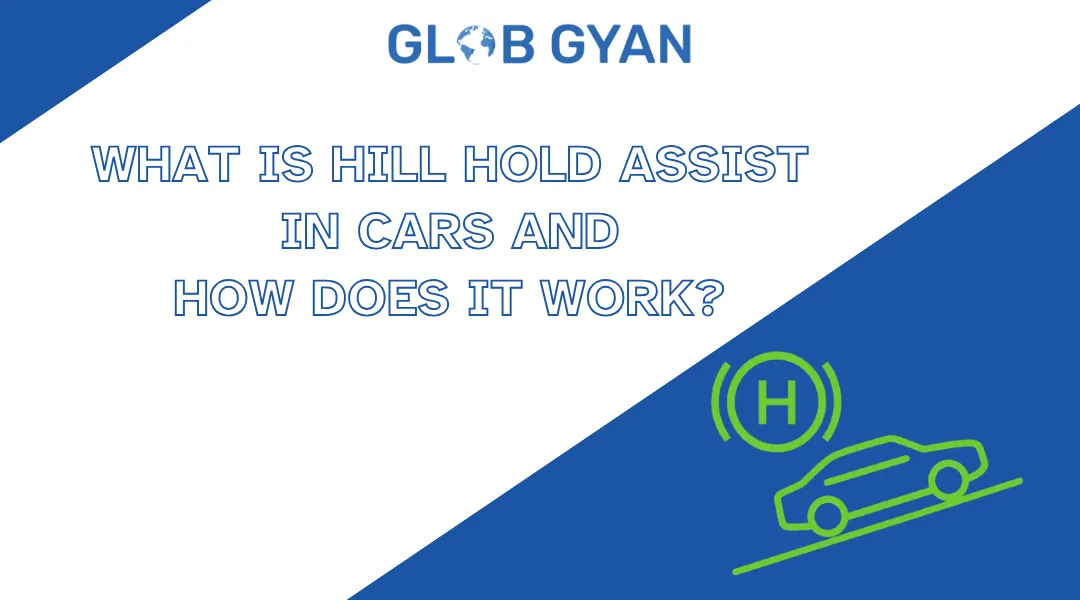
Hill hold assist is a driver assistance feature that keeps a car from rolling backward for a few seconds after you take your foot off the brake on a slope. Some manufacturers call it hill-start assist, hill-hold control or hill-start assist control but they all describe the same basic idea.
The system briefly holds the brakes in place after your foot lifts off the pedal. That short pause gives you time to move your foot to the accelerator without gravity pulling the car backward in the meantime.
It sounds simple, and honestly, it is. But the simplicity is exactly why it works so well.
A Brief History of Hill Hold Assist
Here’s something that might surprise you: this feature is much older than most people assume.
The hill-holder was invented by Wagner Electric and manufactured by the Bendix Brake Company, and it first appeared in 1936 as an option on the Studebaker President, marketed under the name “NoRoL.” By 1937, Hudson, Nash, and several other automakers had adopted the same basic device.
The early version was purely mechanical. It used a sensor to detect a forward-facing incline, paired with a disengaging mechanism that released the brake once the clutch reached its friction point. No computers, no electronics, just clever mechanical engineering solving a problem that had been annoying drivers since the invention of hills.
Cadillac and Stutz even offered similar systems before World War II, under names like “NoRol” and “Noback” The feature stuck around for decades afterward, quietly built into cars long before it became a marketing bullet point.
How Hill Hold Assist Works in a Car
Modern hill hold assist is far more advanced than its 1936 ancestor, but the goal hasn’t changed one bit.
Here’s the general sequence most systems follow:
- Detection. Sensors, usually including an inclinometer, gyro sensor, and wheel-speed sensors, detect that the car is stopped on a slope.
- Activation. When you press and hold the brake pedal, the system engages the vehicle’s brakes to keep it in place.
- The hold. Once you lift your foot off the brake, the brakes stay engaged briefly, typically for around two to three seconds depending on the manufacturer.
- Release. As soon as you press the accelerator (or in manual cars, as the clutch reaches the friction point), the system releases the brakes and lets the car move forward smoothly.
The car’s electronic control unit (ECU) acts as the coordinator here. It pulls in data from angle sensors, brake pressure, torque output, wheel speed and gear position, then decides in real time whether to hold or release the brakes.
Electric vehicles handle this slightly differently. Instead of relying only on the brake system, some EVs use the electric motor and regenerative braking to keep the car stationary on an incline, which means the physical brake pads barely need to get involved.
Hill Hold Assist vs Similar-Sounding Features
Car brochures love throwing around similar terms, and it’s easy to mix them up. Here’s a quick, honest breakdown.
Hill Hold Assist vs. Auto-Hold
These feel similar but trigger differently. Hill-start assist activates automatically once the system detects your car is stopped on a slope, while auto-hold engages only when the driver presses and releases the brake pedal deliberately while stopped, on flat ground or a hill.
Hill Hold Assist vs. Hill Descent Control
Hill hold assist deals with starting on a slope. Hill descent control is the opposite problem: it manages your speed while going down a steep hill, using anti-lock brakes and traction control to keep things steady without you riding the brake pedal the whole way down.
Knowing the difference matters if you’re comparing trims or reading a spec sheet, since manufacturers rarely explain this clearly on their own.
How to Use Hill Hold Assist?
Good news: in almost every car, you don’t have to do anything special to use it. It just works in the background. But here’s what the process looks like if you want to understand it step by step.
In a manual transmission car:
- Press the clutch and brake together to stop on the incline.
- Shift into first gear (or reverse, if you’re facing downhill and backing up).
- Slowly release the brake while easing off the clutch.
- Hill hold assist keeps the car in place for those crucial few seconds while you find the friction point.
In an automatic transmission car:
- Stop on the incline with your foot on the brake.
- Make sure the car is in “D” (Drive).
- Release the brake and press the accelerator.
- The system holds the car briefly, then lets it move forward as you apply gas.
Most cars enable this feature by default, though some let you turn it off through a dashboard button or an infotainment menu setting.
Does Every Car Have Hill Hold Assist?
Not every single car on the road has it, but it’s become remarkably common. Even budget-friendly models, including entry-level trims of affordable hatchbacks, now include hill-start assist as standard equipment.
That said, availability still depends on the make, model, transmission type, and trim level. Older vehicles or base trims of certain models may skip it entirely, so it’s worth checking the spec sheet if this feature matters to you.
And yes, electric vehicles get it too. Gravity doesn’t care what powers your car, so EV manufacturers build in the same rollback protection, just using the motor and regenerative braking instead of (or alongside) the traditional brake system.
The Real Benefits of Hill Hold Assist
This feature isn’t just a nice-to-have. It solves a genuinely stressful driving situation.
- Prevents rollback accidents. It stops your car from drifting backward into the vehicle, pedestrian, or object behind you.
- Builds driver confidence. New drivers, or anyone unfamiliar with hilly terrain, feel noticeably calmer handling inclines.
- Reduces multitasking stress. Manual drivers no longer need to juggle clutch, brake, and accelerator in one smooth motion under pressure.
- Works well in stop-and-go traffic. Steep flyovers, hill junctions, and uphill traffic lights become far less nerve-wracking.
- Eases long-term engine strain. Since the engine doesn’t need to rev aggressively to fight gravity from a standstill, it runs slightly smoother, which can help with wear over time.
Limitations You Should Know
No feature is perfect, and hill hold assist has a few honest limits worth knowing before you rely on it completely.
- It’s time-limited. The hold typically lasts only two to three seconds. Hesitate too long, and the brakes release anyway.
- Steep or unstable surfaces can defeat it. On very steep inclines, or on snow and ice, the tires may lose traction regardless of what the brakes are doing.
- It won’t help with wandering attention. The system holds your position, but it still expects you to press the accelerator promptly.
- It doesn’t add traction. Hill hold assist stops rollback; it doesn’t improve grip. That job belongs to traction control and stability systems instead.
Treat it as a helpful safety net, not a substitute for paying attention to the road.
Final Remarks
Hill hold assist started as a clever mechanical trick from the 1930s and quietly evolved into one of the most useful, least talked-about safety features in modern cars. Whether you’re driving a manual up a steep city flyover or easing an EV forward at a hillside traffic light, this small system is working in the background to keep you safe from a very ordinary, very common driving hazard: gravity.
Next time you stop on a hill without a hint of rollback, you’ll know exactly which unsung feature deserves the credit.