




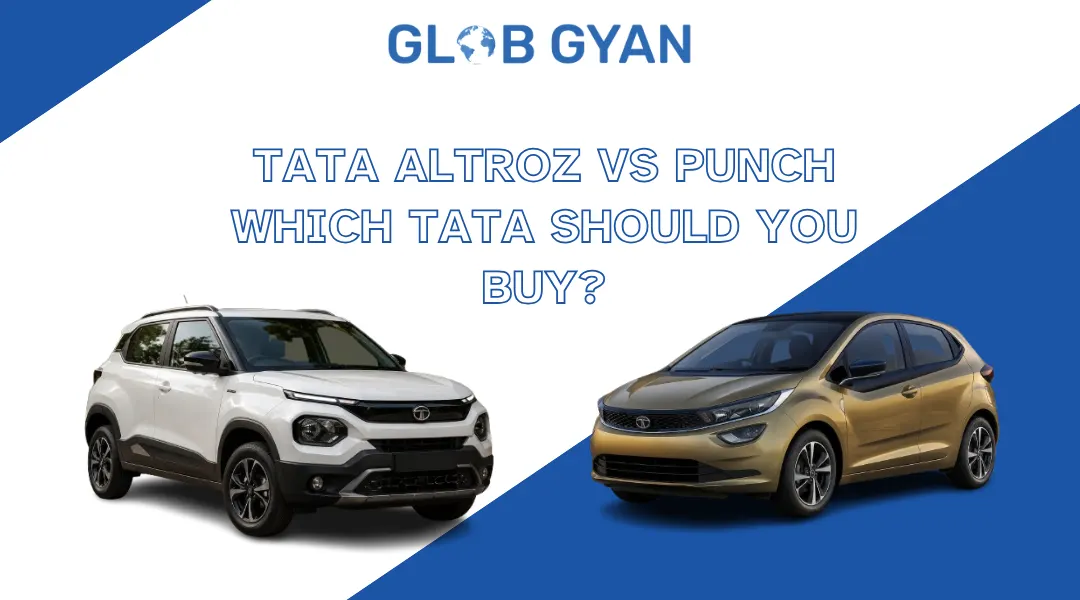
Both are Tata cars & share the same ALFA platform. Both cost between Rs 6 and Rs 10 lakh. And yet, the Tata Altroz and Tata Punch serve completely different kinds of buyers. Choosing between Tata Altroz vs Tata Punch: Which Tata Car Should You Buy? is not as simple as picking the cheaper one it requires understanding what each car does well, where it falls short and which one fits your specific life.
This guide gives you everything you need real specs, current 2026 prices, honest observations and a clear final verdict so you can walk into the showroom with confidence.
What Are These Cars, Really?
The Tata Altroz is a premium hatchback. It launched in India in January 2020 and received a substantial facelift in May 2025. The facelift brought sharper styling, a far more premium cabin, a new DCA (Dual Clutch Automatic) gearbox, six airbags as standard across all variants, and a significantly upgraded technology package. It is Tata’s answer to the Maruti Suzuki Baleno and Hyundai i20 cars that attract buyers who want a sophisticated, feature-rich daily driver.
The Tata Punch is a micro-SUV. It launched in October 2021 and has received a facelift, adding more variants, a turbo-petrol engine option, and a CNG automatic combination. It sits on the same ALFA platform as the Altroz but wears an SUV-style body with a higher riding position, more ground clearance, and a rugged attitude. It is the best-selling model in Tata’s lineup and one of the top-selling passenger cars in India overall.
Price in 2026- Who Wins at the Showroom?
The Tata Altroz starts at Rs 6.89 lakh (ex-showroom) for the base Smart Petrol MT variant and goes up to Rs 11.49 lakh for the top-spec Accomplished Plus S Petrol DCA variant. The Tata Punch starts at Rs 5.59 lakh for the Smart variant and goes up to Rs 10.54 lakh for the Accomplished Plus S CNG AMT variant.
This means the Punch is the more affordable starting point — cheaper by over Rs 1.30 lakh at the base. However, the Altroz’s top variant is slightly more expensive than the Punch’s top, which reflects the premium cabin and additional powertrain variety it offers.
At the mid-range Rs 7.5 to Rs 9 lakh sweet spot where most buyers shop, both cars offer very comparable feature sets. The Altroz edges ahead on refinement; the Punch edges ahead on practicality and SUV appeal. More on this below.
Engine Options- Altroz Has the Edge in Variety
This is one area where the Altroz clearly pulls ahead.
Tata Altroz (2025 Facelift) Engine Options: The 2025 Tata Altroz facelift is powered by a 1.2-litre Revotron petrol engine that delivers 87 bhp and 115 Nm of torque. This engine is available with a 5-speed manual, a 5-speed AMT, and a 6-speed DCA (DCT) transmission. Additionally, the Altroz carries forward its 1.5-litre diesel engine and a CNG variant — making it the only premium hatchback in India to offer petrol, diesel, CNG, and automatic options simultaneously.
Tata Punch Engine Options: The Punch uses the same 1.2-litre naturally aspirated petrol producing 88 bhp and 115 Nm, paired with either a 5-speed manual or an AMT. The Punch also offers a CNG variant delivering 73.5 bhp and 103 Nm, as well as a 1.2-litre turbo-petrol engine producing 120 bhp and 170 Nm, paired with a 6-speed manual.
Real-World Driving Feel: The Altroz’s DCA gearbox is genuinely impressive for a car in this price band. The 6-speed DCT enhances the overall driving experience and the engine feels smooth and refined, driving effortlessly in city traffic and cruising comfortably at 80–100 kmph on highways.
The Punch’s naturally aspirated petrol is adequate for city use but feels breathless on highway overtakes. The turbo-petrol variant, on the other hand, is genuinely fun — brisk, responsive, and easy to enjoy on open roads. If you want an engaging drive, go for the Punch Turbo with manual gearbox. If you want refinement and a proper automatic, go for the Altroz DCA.
Mileage- Diesel Altroz Leads the Pack
Fuel efficiency matters enormously in India, especially if you cover 1,500+ kilometres per month.
Altroz petrol mileage is around 18–19 kmpl. Altroz diesel mileage goes up to 23–24 kmpl on highways. Altroz CNG mileage is about 27 km/kg. Punch petrol mileage is about 18.8 kmpl. Punch CNG mileage is roughly 26–27 km/kg. Real-world city mileage can dip lower depending on traffic and load, with both cars averaging around 12–14 kmpl in heavy traffic.
The takeaway is simple: for daily city commuters, both petrol variants are neck and neck. But if you drive long distances regularly, the Altroz diesel at 23–24 kmpl on highways delivers fuel savings that can pay back its price premium over time. The Punch has no diesel option — a genuine gap in its lineup.
Dimensions and Space- Different Priorities
Here is where the two cars genuinely diverge in character.
The Tata Altroz measures 3,990 mm in length, 1,755 mm in width, and 1,523 mm in height, with a 2,501 mm wheelbase. The Tata Punch measures 3,827 mm in length, 1,742 mm in width, and 1,615 mm in height, with a 2,445 mm wheelbase.
The Altroz is meaningfully longer, wider, and has a longer wheelbase — this translates directly into a roomier rear bench and more shoulder room for adult passengers. The Altroz offers adequate boot space of 345 litres in petrol and diesel variants and 210 litres in the CNG variant.
The Punch’s boot space stands at 366 litres for petrol variants, lower in CNG variants due to the twin-cylinder tanks.
The Punch’s boot slightly edges out the Altroz in petrol form (366 L vs 345 L). But here is the bigger practical difference: the Punch is 92 mm taller than the Altroz. That height advantage means easier entry and exit for elderly passengers, a more commanding driving position, and visually, it looks like an SUV rather than a low-slung hatchback.
Ground clearance settles the debate for anyone on rough roads: the Punch has a ground clearance of 187 mm while the Altroz sits at just 165 mm. That 22 mm difference is significant in India — the Altroz will scrape its underbody on sharp speed bumps that the Punch clears easily.
Features- Altroz Goes Premium, Punch Goes Practical
The 2025 Altroz facelift brought a genuinely impressive technology upgrade.
The Altroz facelift includes a voice-activated sunroof, a 360-degree HD surround camera system, a wireless smartphone charger, ventilated seats, automatic climate control with rear AC vents, a 10.25-inch infotainment touchscreen, a blind spot monitor, paddle shifters on the DCA variant, auto-fold ORVMs, TPMS, and an in-cabin air purifier. Wireless Apple CarPlay and Android Auto come as standard, along with 65W USB Type-C chargers at both front and rear that can even power a laptop. The ambient lighting system adds a premium touch that you rarely see at this price point.
The Tata Punch’s top variant offers its own strong feature list: a 10.25-inch touchscreen, a 7-inch digital driver’s display, a single-pane sunroof, a wireless phone charger, automatic climate control with rear AC vents, and cruise control.
Both cars offer a sunroof, wireless charging, automatic climate control, and a large touchscreen at their respective top variants. Where the Altroz pulls noticeably ahead is the ventilated seats, in-cabin air purifier, blind spot monitor, and the DCA’s paddle shifters — features that feel genuinely segment-defying for a hatchback.
Where the Punch holds its ground is sheer variant count. The Punch is available in 34 different variants compared to the Altroz’s 20, which means there is almost certainly a Punch variant that fits your exact budget and requirement.
Safety- Both Score 5 Stars — Here Are the Details
Tata has built its brand reputation on safety, and both cars deliver.
Tata Altroz: The Altroz carries a 5-star BNCAP adult rating, a 5-star BNCAP child rating, a 5-star GNCAP adult rating, and a 4-star GNCAP child rating. It comes loaded with 6 airbags as standard across all variants, along with ABS, EBD, ESP, TPMS, a 360-degree surround camera, and ISOFIX child seat mounts.
Tata Punch: The Tata Punch secured a five-star safety rating under Bharat NCAP, scoring an impressive 30.58 points out of a maximum of 32 in Adult Occupant Protection. The structure was rated as stable, offering strong protection in both frontal offset and side impact crash tests.
Both cars are genuinely safe. The Altroz has six airbags as standard even in the base variant — a strong advantage over the Punch’s base variants, which come with fewer airbags on entry trims. If you are buying a base or mid-spec variant, the Altroz’s standard six-airbag setup is a compelling safety argument.
Ride and Handling- Two Different Characters
The Altroz rides on a longer wheelbase and delivers a planted, stable feel. Its suspension is tuned for refinement — it absorbs road imperfections smoothly and feels composed at highway speeds. Body roll is well-controlled for a hatchback. The DCA gearbox, in particular, makes driving in stop-and-go city traffic genuinely effortless.
The Punch has a taller, slightly softer suspension that prioritises comfort on broken urban roads. It handles potholes and speed bumps more confidently than the Altroz. The higher seating position improves driver visibility significantly. In wet weather or on gravel roads, the Punch’s greater ground clearance means you worry less about the road surface.
The diverse powertrain lineup — especially the continued presence of a diesel engine and the addition of an AMT — sets the Altroz apart as a well-rounded offering. For a driver who values the feel of the car, the Altroz delivers a more refined, car-like experience. For a driver who wants confidence in all road conditions, the Punch delivers better.
After-Sales and Ownership Cost
Both cars benefit from Tata Motors’ extensive service network — one of the largest among Indian carmakers with over 1,500 service centres across the country. Spare parts are affordable and widely available.
The Altroz diesel, however, adds an extra maintenance cost consideration. Diesel cars in India typically cost slightly more to service than petrol units, though the fuel savings usually compensate over 50,000–60,000 kilometres of driving.
Both cars hold their resale value well, driven by Tata’s strong brand image in 2025–26. The Punch, being the higher-selling model, has a more active used car market, which generally means slightly faster resale.
Head-to-Head Summary
| Feature | Tata Altroz | Tata Punch |
| Starting Price | Rs 6.89 lakh | Rs 5.59 lakh |
| Engine Variety | Petrol, Diesel, CNG | Petrol, Turbo-Petrol, CNG |
| Best Mileage | 23–24 kmpl (Diesel) | 18.8 kmpl (Petrol) |
| Ground Clearance | 165 mm | 187 mm |
| Boot Space | 345 litres | 366 litres |
| Standard Airbags | 6 (all variants) | Varies by variant |
| NCAP Rating | 5-star BNCAP and GNCAP | 5-star BNCAP and Global NCAP |
| Automatic Gearbox | AMT, DCA (6-speed) | AMT |
| Sunroof | Yes (select variants) | Yes (select variants) |
| Diesel Option | Yes | No |
Who Should Buy Which Car?
Buy the Tata Altroz if:
- You drive long distances and want diesel fuel economy
- You prefer a refined, premium cabin feel
- Six airbags as standard across all variants matters to you
- You want a DCT/DCA automatic with paddle shifters
- Highway stability and composed handling are your priorities
- You want ventilated seats, an air purifier, or a more upscale interior
Buy the Tata Punch if:
- Ground clearance and all-road confidence are important
- You want an SUV-style seating position and easier entry and exit
- Turbo-petrol power excites you
- You need CNG with an automatic gearbox
- Budget is tight and you want the lowest starting price
- You regularly carry elderly family members who find stepping into low cars difficult
Final Verdict
Tata Altroz vs Tata Punch do not really compete with each other at heart — they serve different personalities. The Altroz is for the buyer who values refinement, fuel variety, and a premium driving experience. The 2025 facelift has genuinely elevated it to a class above where it started in 2020.
The Punch is for the buyer who values confidence, versatility, and the feel of sitting high over the road. Its SUV attitude, combined with proven five-star safety and a massive variant lineup, makes it one of the smartest purchases in the Indian market under Rs 10 lakh.
If you only drive in the city and comfort is the priority: the Altroz DCA wins. If you want a car that handles everything India throws at it broken roads, monsoon floods, steep driveways, and highway trips the Punch wins. Either way, both are excellent choices from a brand that has genuinely earned its reputation for building safe, honest cars.